The First Berserker Khazan
2022 - 2025Level Designer
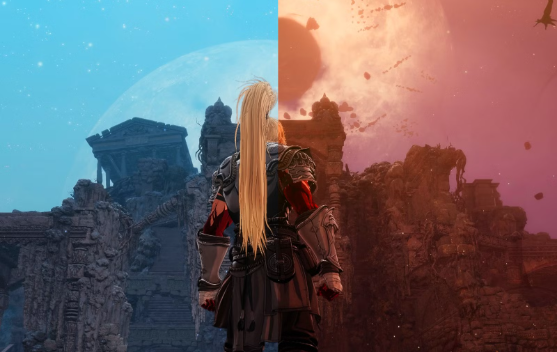
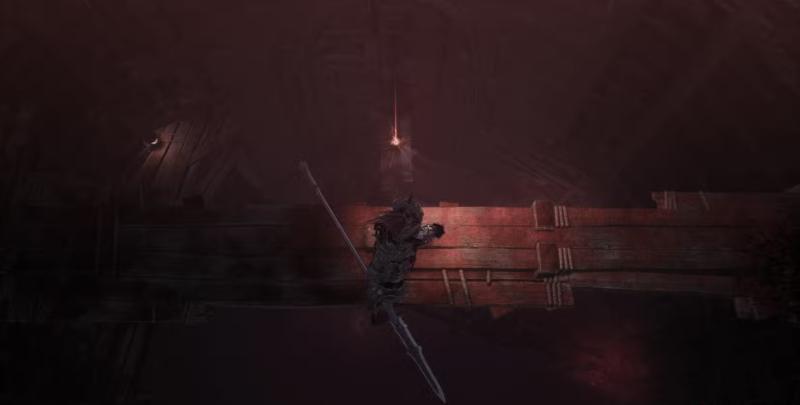
Development Process
When I joined the Khazan team, it was in its early stages with only one map completed.
After demonstrating strong performance during initial testing, I was given the opportunity to create 6 main levels and 1 sub-level.
Each level went through a planning phase based on the world setting — overall concept, flow, and intended player experience — followed by blockout work. During this process, I also created the level objects needed for each level.
After level creation, multiple iterations of testing and refinement were conducted. I then held kickoff meetings with partner departments to share the completed levels and objects, synchronizing on design intentions, goals, and direction. Through close collaboration with related departments, I helped in every way possible to achieve polished results. Even after completion, we dedicated time to repeated testing and quality improvement before finally launching.
The journey from early development to launch at Khazan was challenging yet provided valuable growth experiences. It was particularly meaningful because of the great colleagues I met on this project.
Key Responsibilities
Level Design
Designed playable spaces, flow, and player experiences through concept planning and blockout work
6 main levels + 1 sub-level created
Level Object Production
Concept planning and Blueprint-based prototype creation
Final assembly and polish after art resource handoff
Approximately 30 level objects created
Mission Scripting
Mission start-to-end flow work using Level Blueprints
Spawn events, cinematic sequence connections, and system control
Placement & Balance
Monster and reward placement aligned with level intent; difficulty and pacing adjustments through iterative testing
Optimization
Adjusted monster and object spawn ranges for performance improvement
Levels I Worked On
Heinmach
Planning & Development
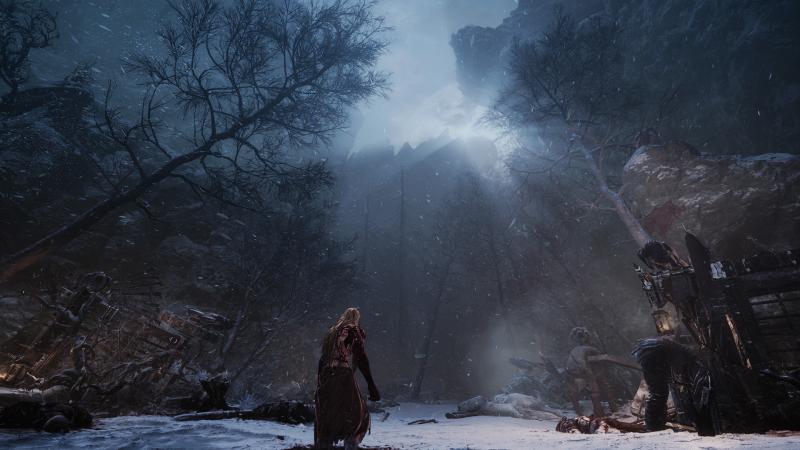
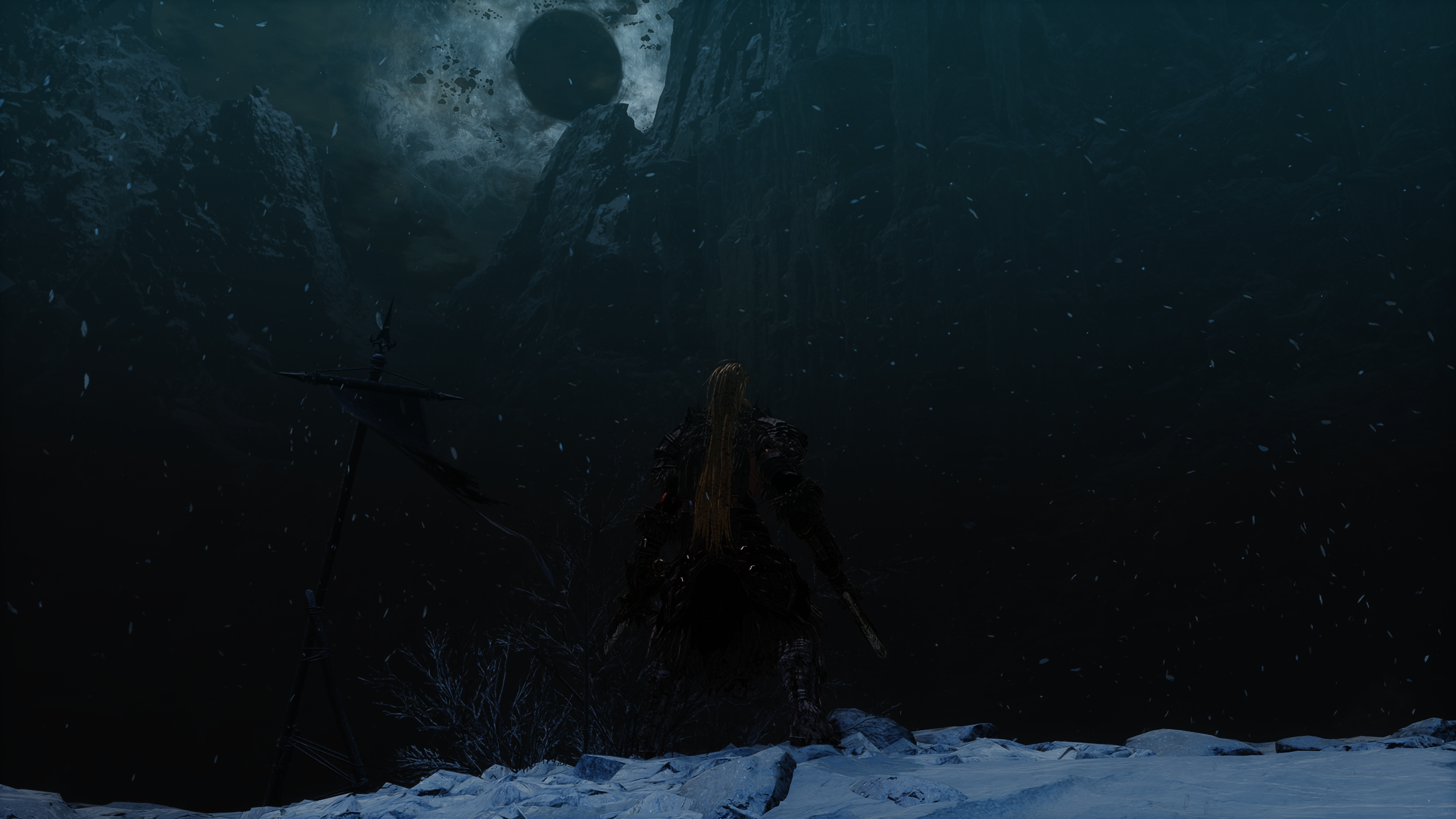
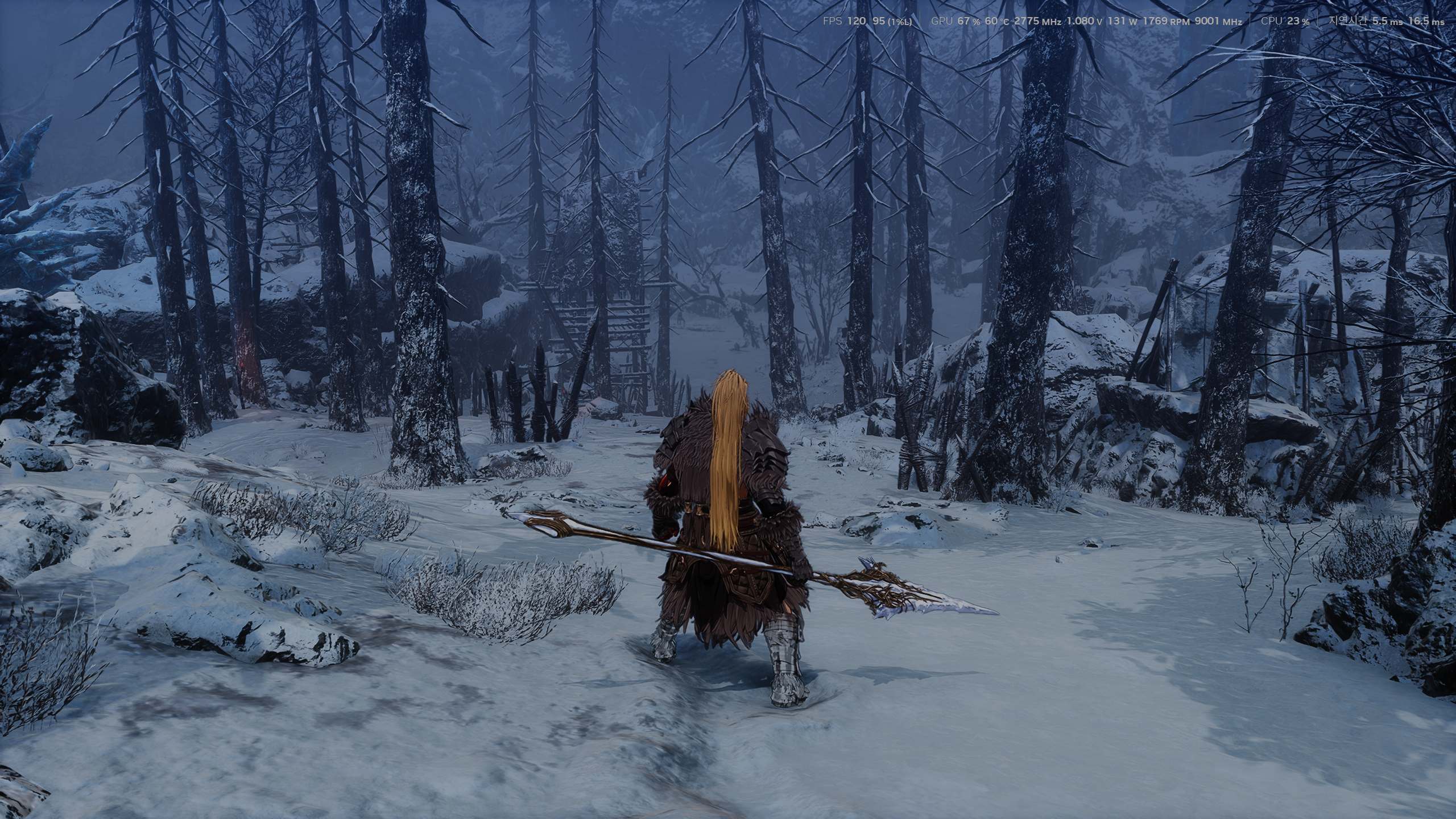
This is the first map I created at Khazan and the first stage that opens the game. The main goal was to deliver the experience of protagonist Khazan escaping from a blizzard-swept snowy mountain.
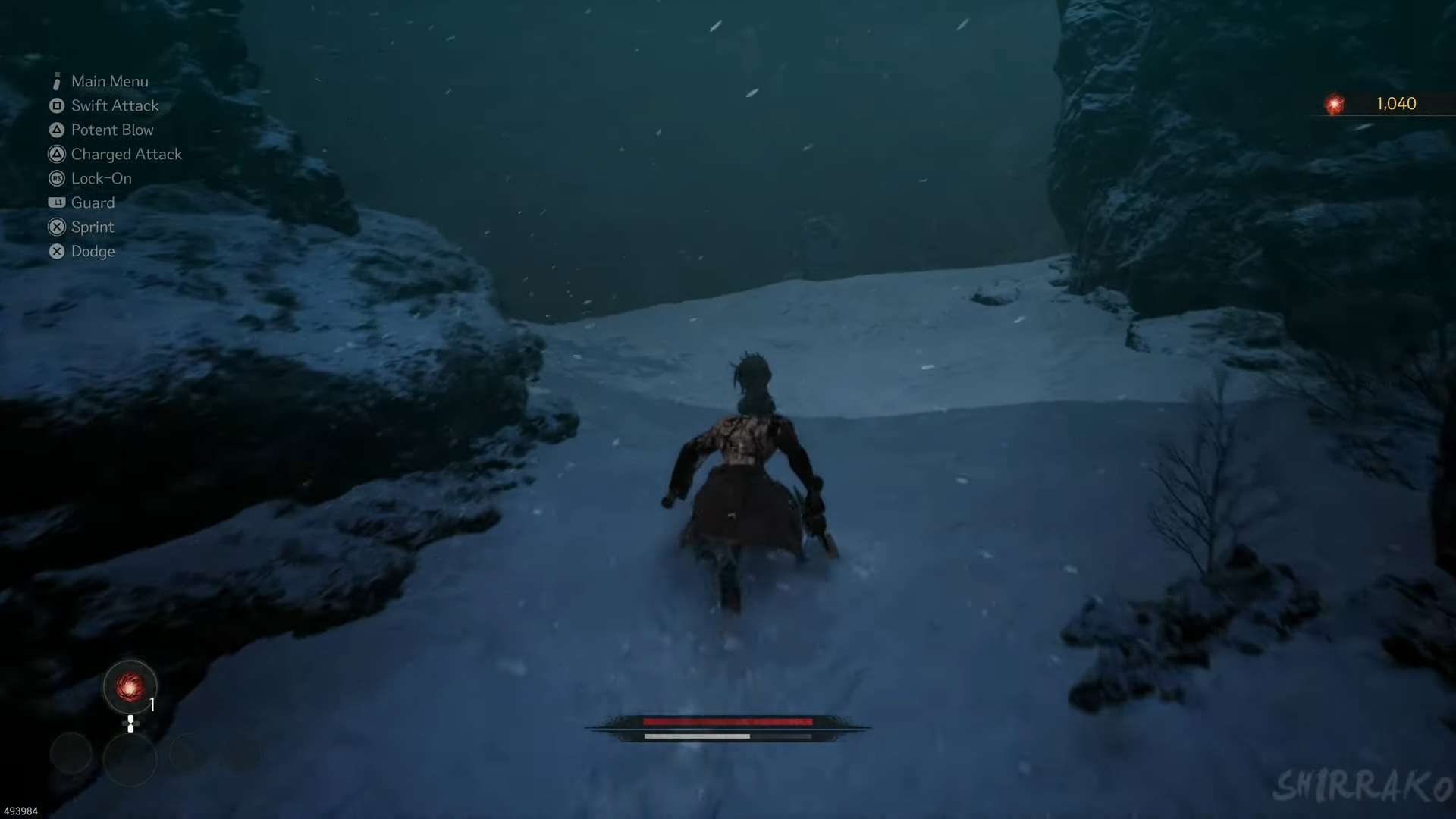
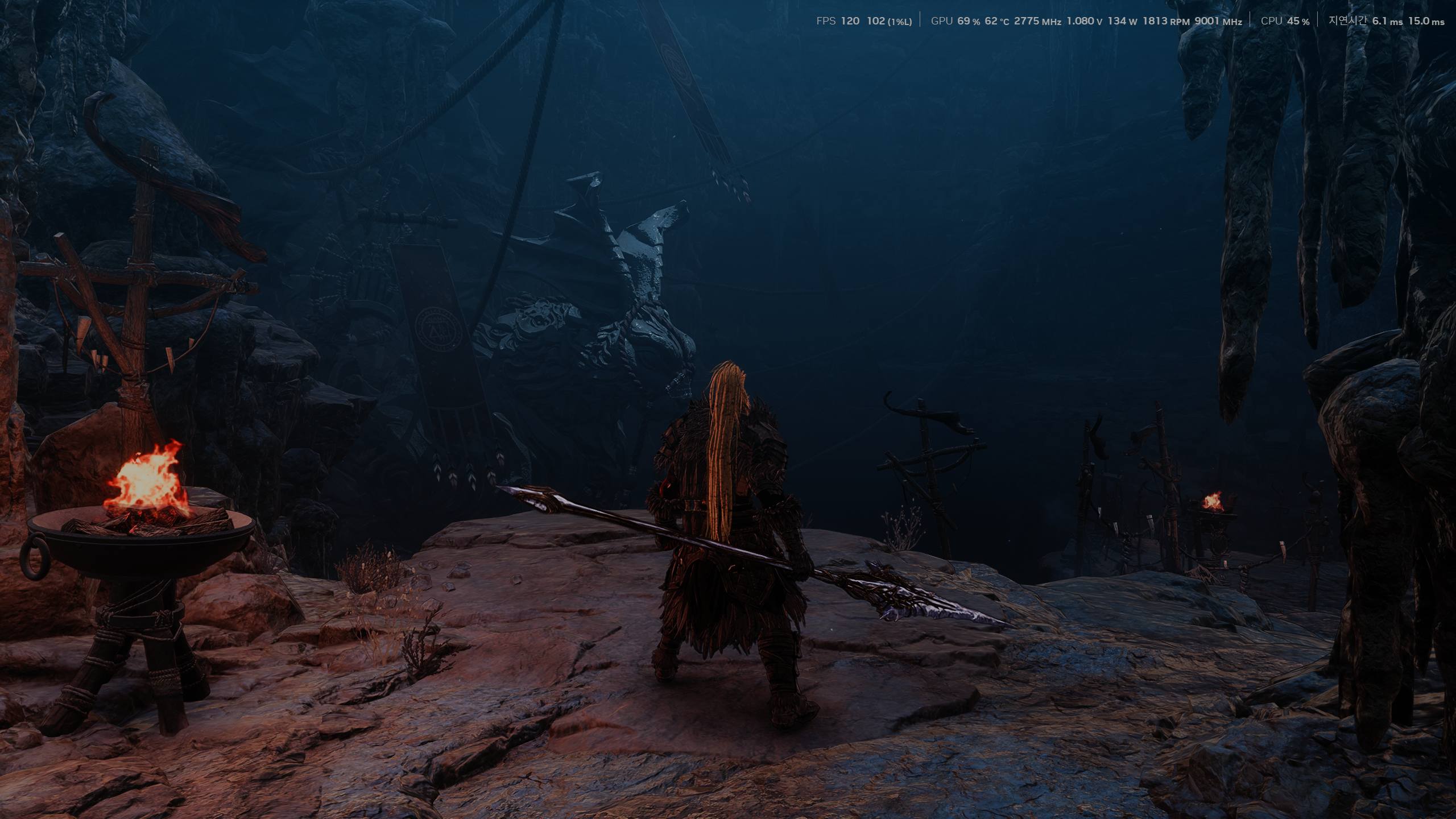
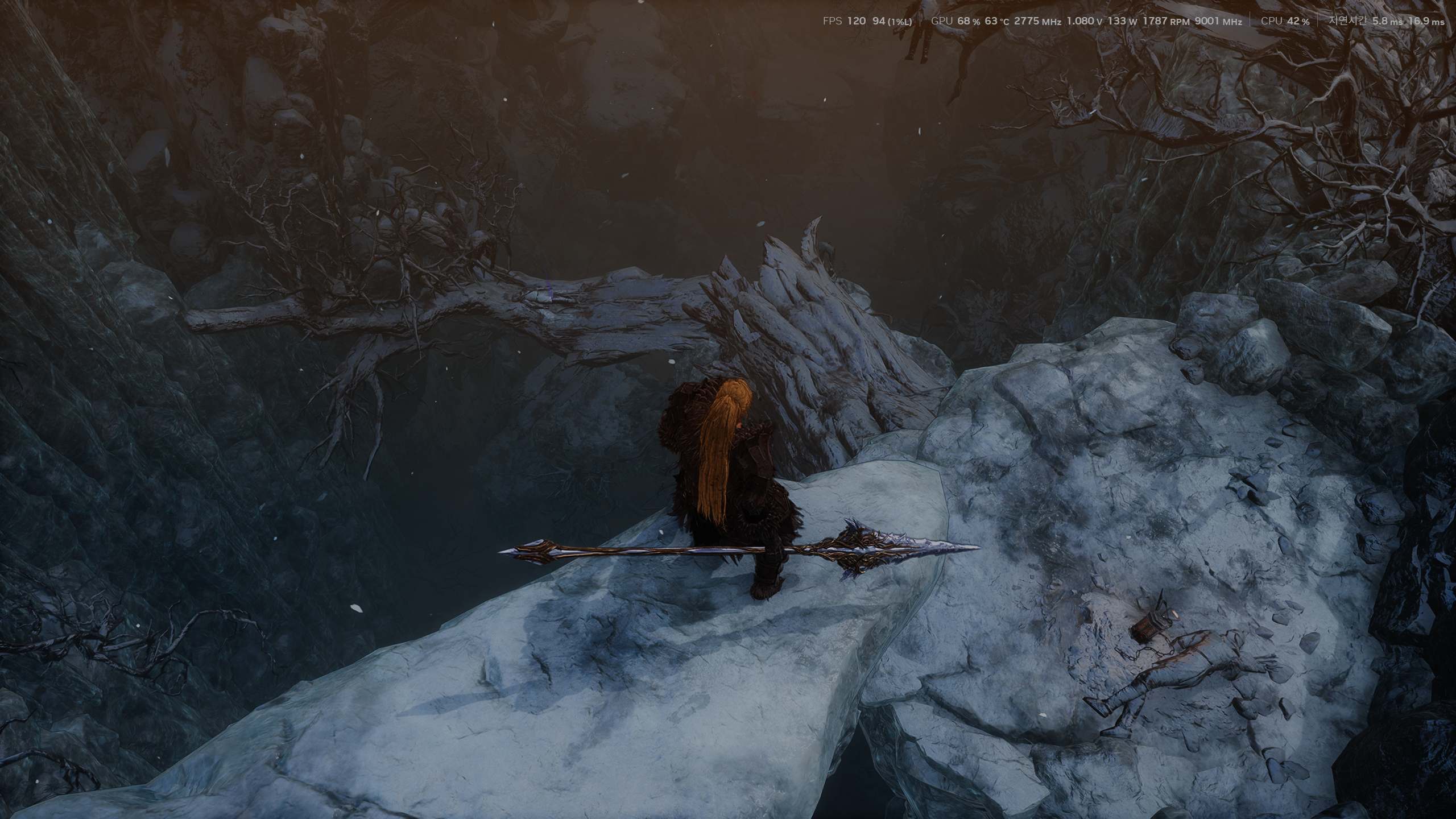
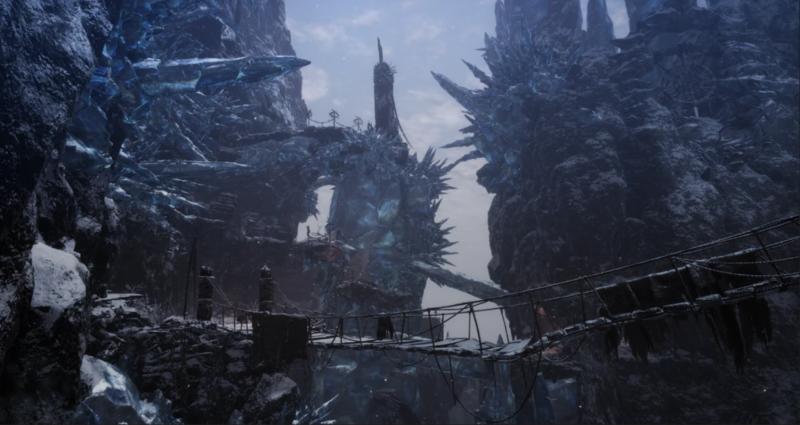
I adopted a descending path structure from top to bottom. Through environmental transitions — from the dark, blizzard-swept upper mountain, through quiet but dark caves, to bright skies upon exit — I aimed to provide a sense of liberation from gradually escaping the snowy mountain. To alleviate the monotony of a single snowy theme, I introduced spatial variations such as blizzard zones, quiet dark caves, and ice waterfalls.
Although the tutorial addition was not confirmed at the time, I designed linear paths and elevation sections at the starting point anticipating future tutorial integration — enabling players to learn the plunge attack. As the first map, I kept a minimized structural complexity with a linear path layout.
In line with the tutorial purpose, monsters were placed sequentially so players could learn step by step:
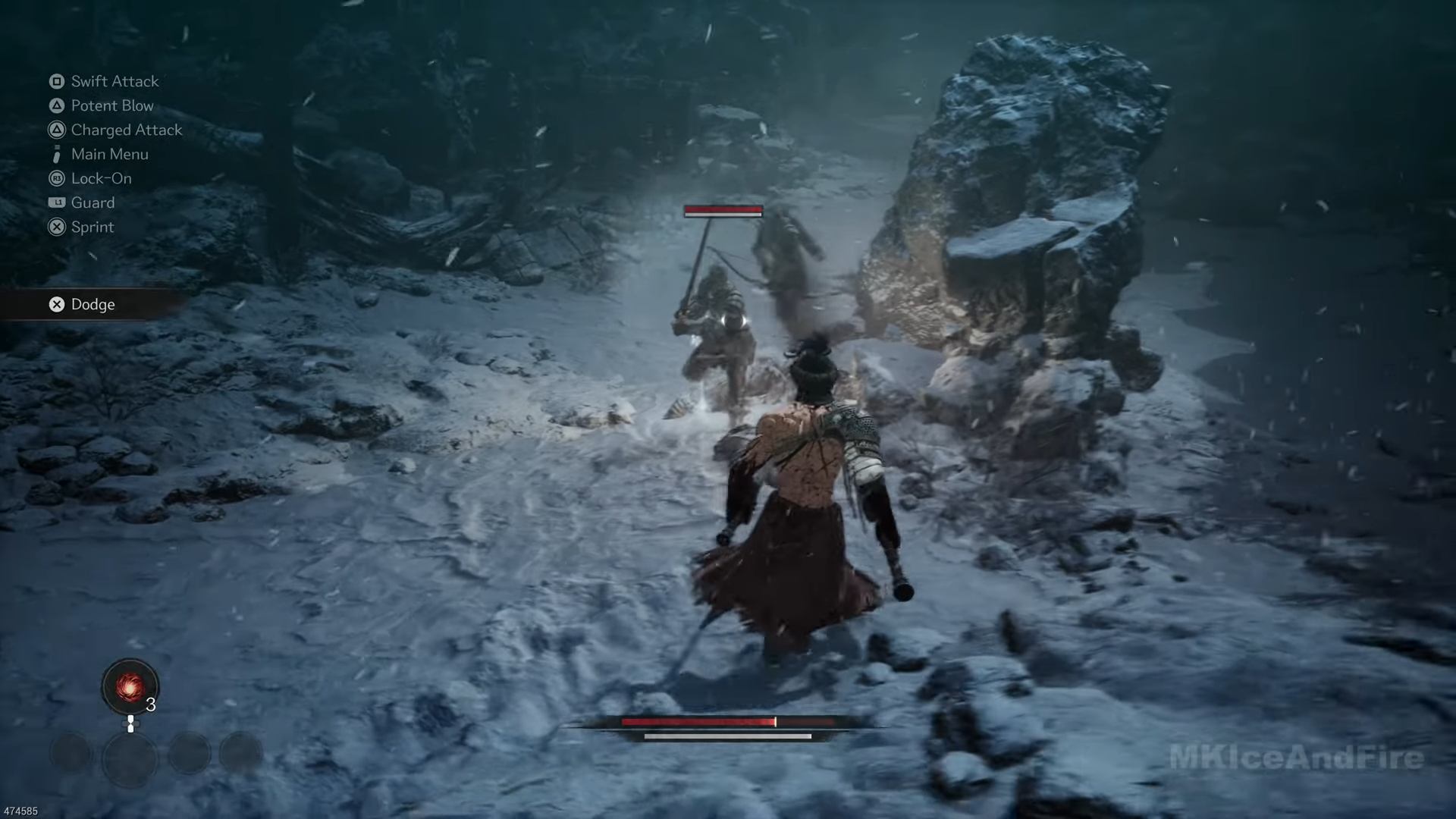
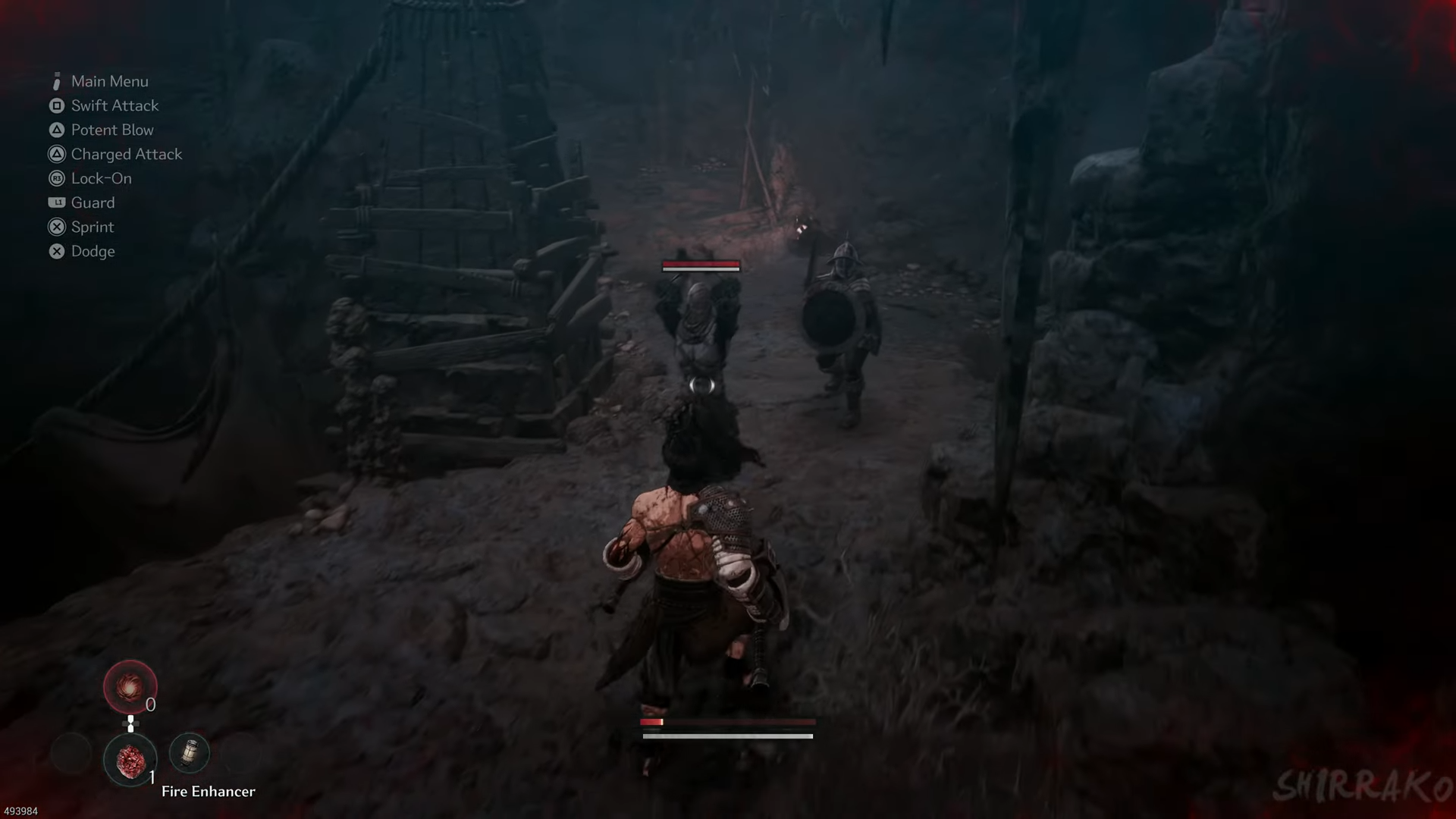
The basic swordsman appears first to guide fundamental combat controls, followed by archers to introduce melee + ranged combo encounters. Large boulders were placed in that section so players could dodge ranged attacks. Elites were placed mainly on sub-paths, and the elite near the starting point is an homage to the Crystal Lizard in Dark Souls 3's Cemetery of Ash.
Being my first level, I was ambitious and enjoyed working on this map. While the map itself is simple, due to its nature as the first level, it required the longest period of work on various core system elements and monster placement balancing.
Retrospective
This was the first main level I was given at Khazan, and I worked on it both ambitiously and joyfully.
The map itself is simple, but because it is the first level of the game, it required comprehensive collaboration across art, modeling, cinematics, effects, and sound — more than any other level — making it a challenging one to deliver.
Working on a tutorial level made me think deeply about player perspective and difficulty. Balancing between action game enthusiasts who might find it dull and newcomers who might find it too hard was difficult. In the end, I judged that accessibility for all players was the right direction, so I focused on minimizing unreasonable or overly difficult elements.
StormPass
Planning & Development
This is the second stage in the game and the third map I created at Khazan. I worked hard to maximize the "trials" narrative — a key element that also appears in the original work.
Initially designed similarly to Dark Souls 3's Farron Keep — where trials scattered across the map could be overcome selectively — I found this structure weakened narrative delivery and dispersed the sense of achievement, so I fully redesigned it.
I shifted direction by reinterpreting the trials as "overcoming Khazan's inner self." I aimed to build narrative connectivity where Khazan overcomes his inner demons, gradually regains his power, and ultimately faces his strongest inner enemy.
The trial sequence was designed to escalate difficulty in line with the narrative: first overcoming the imperial soldiers he failed to save, then his former subordinates, and finally Khazan himself at the height of his power. Upon defeating his own past self in the final trial, he acquires the dual-axe skills — his signature weapon — completing the narrative coherence.
The level starts with a leisurely movement experience in a wide snowy mountain, then gradually narrows space and increases difficulty through vertical terrain and imperial monster placement to deliver a sense of escalating challenge on the way to the trials.
Each time a trial is overcome, Khazan acquires new weapons and skills. Since there was no separate weapon learning section in the game, these trials were restructured as weapon learning sections, delivering a clear sense of reward for each overcome trial.
First Trial
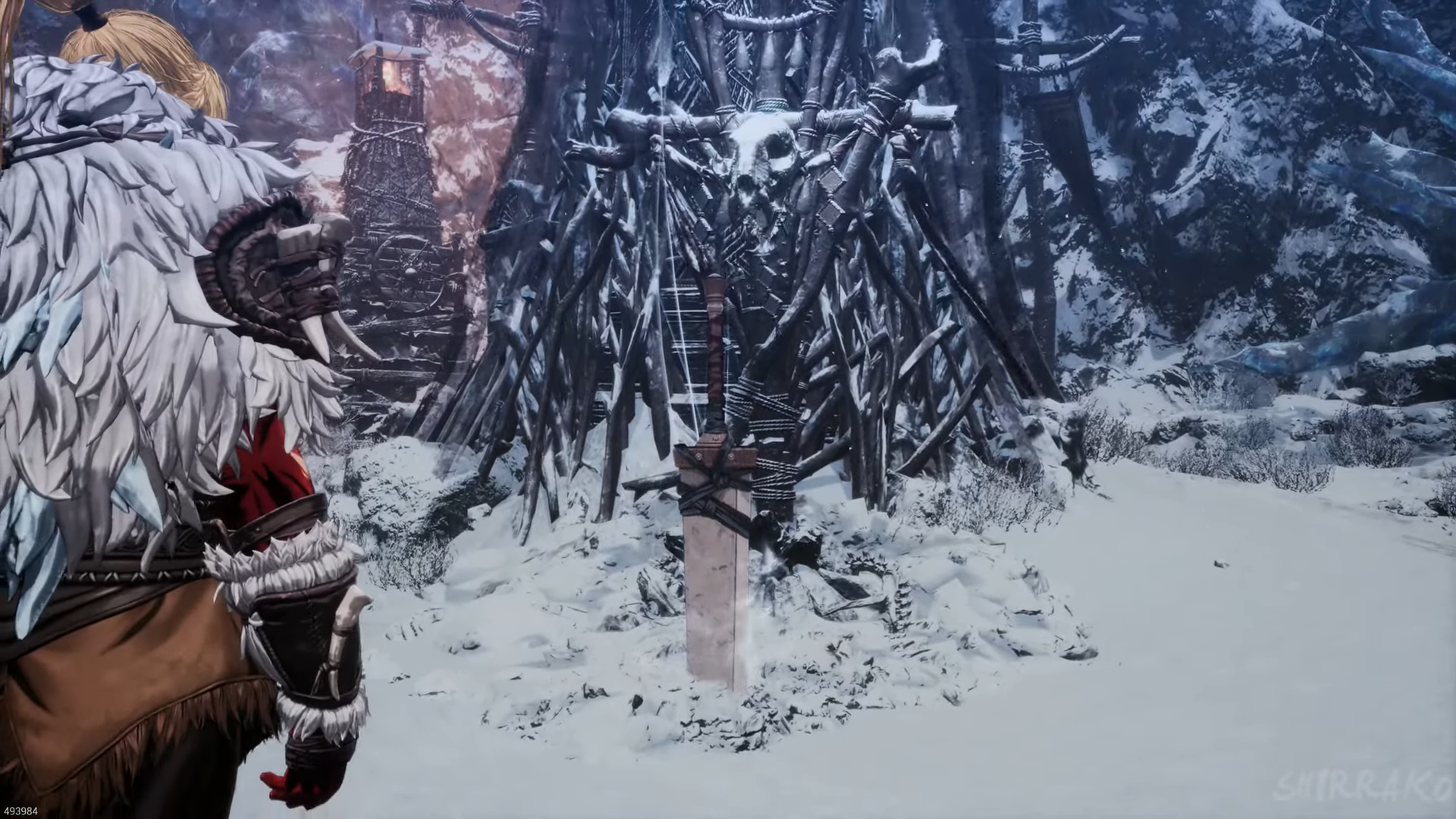
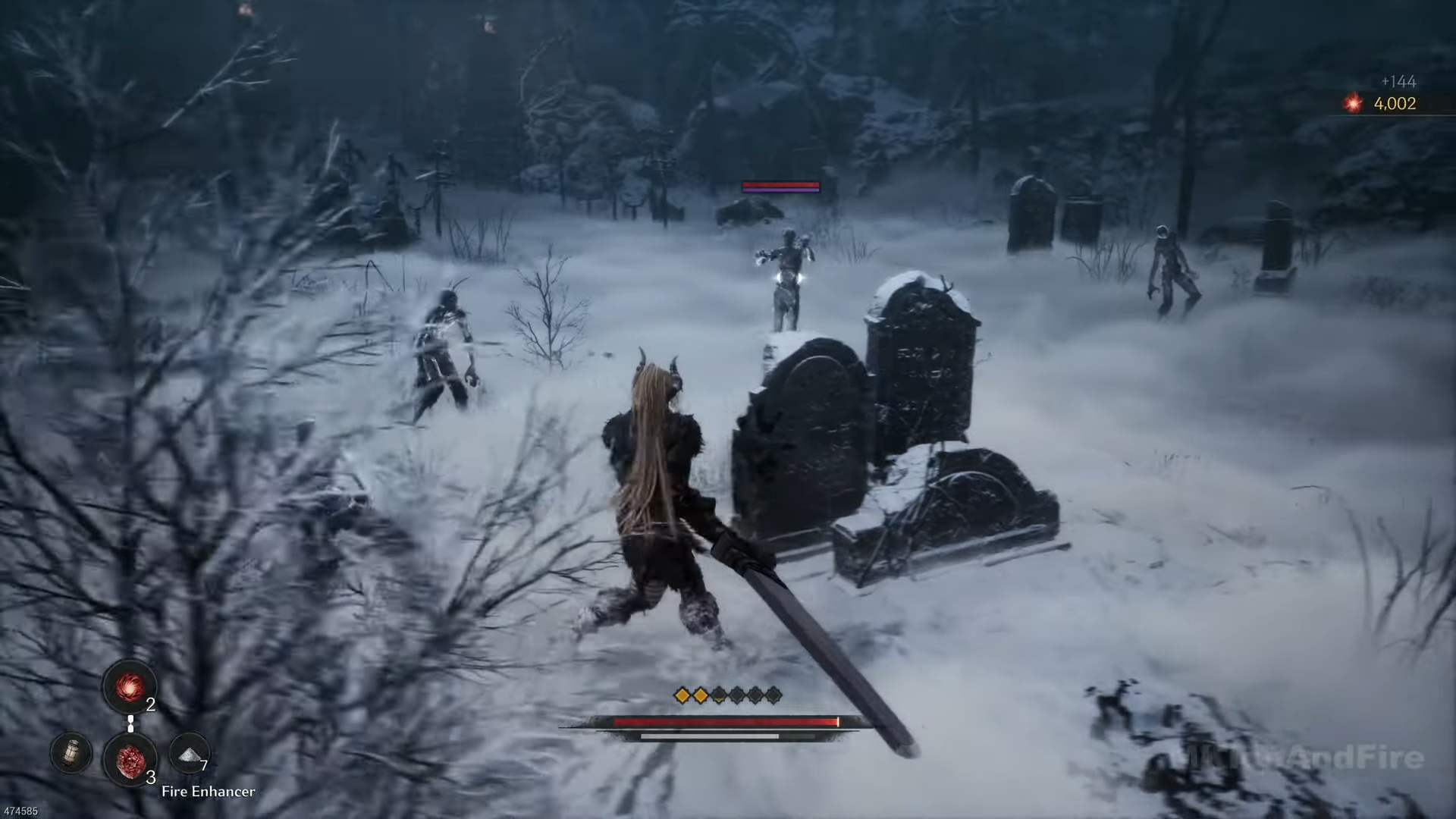
The greatsword — slow but wide-sweeping — paired with sluggish zombie monsters to deliver the fun of sweeping multiple enemies in a stable manner.
Second Trial
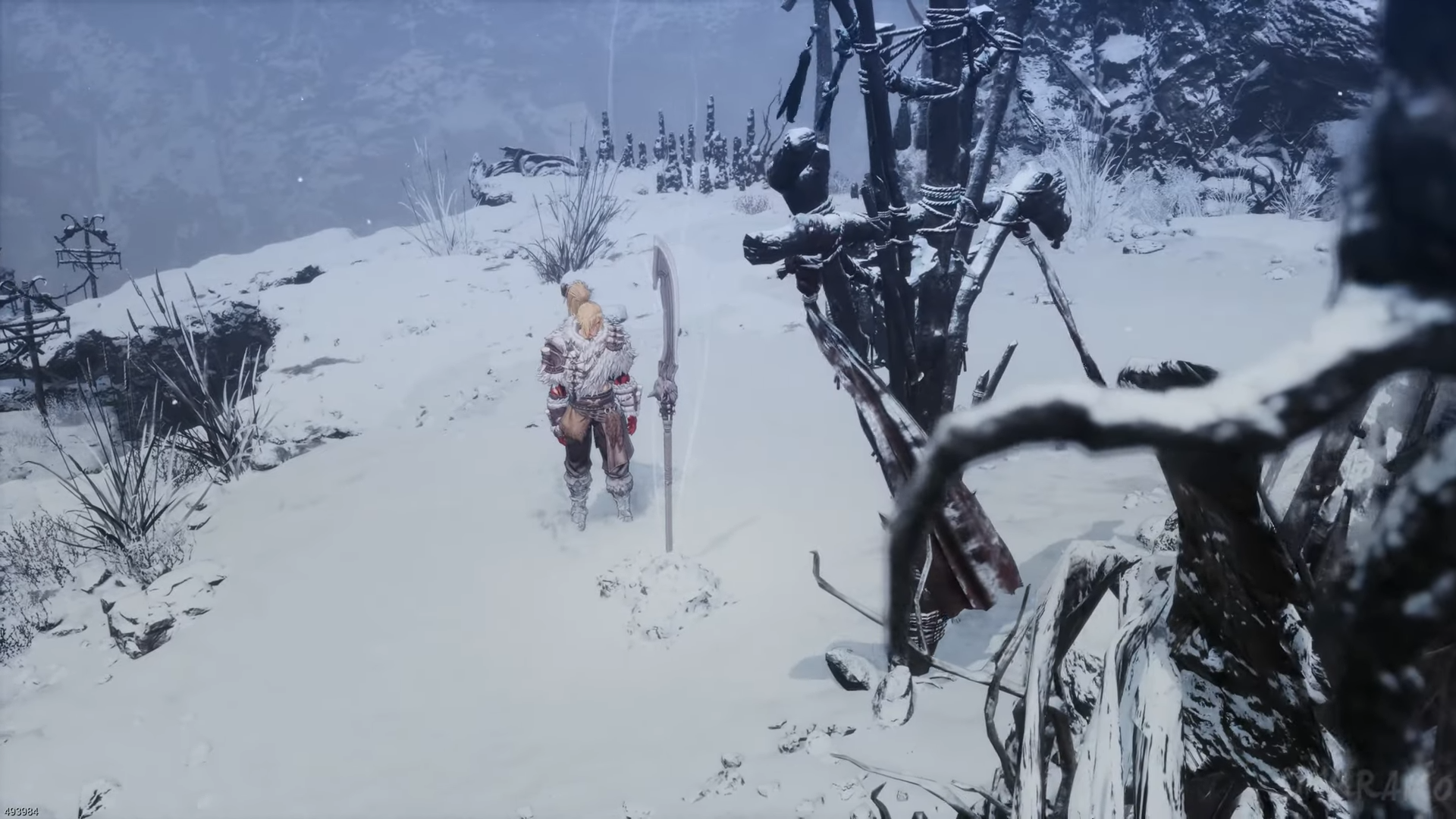
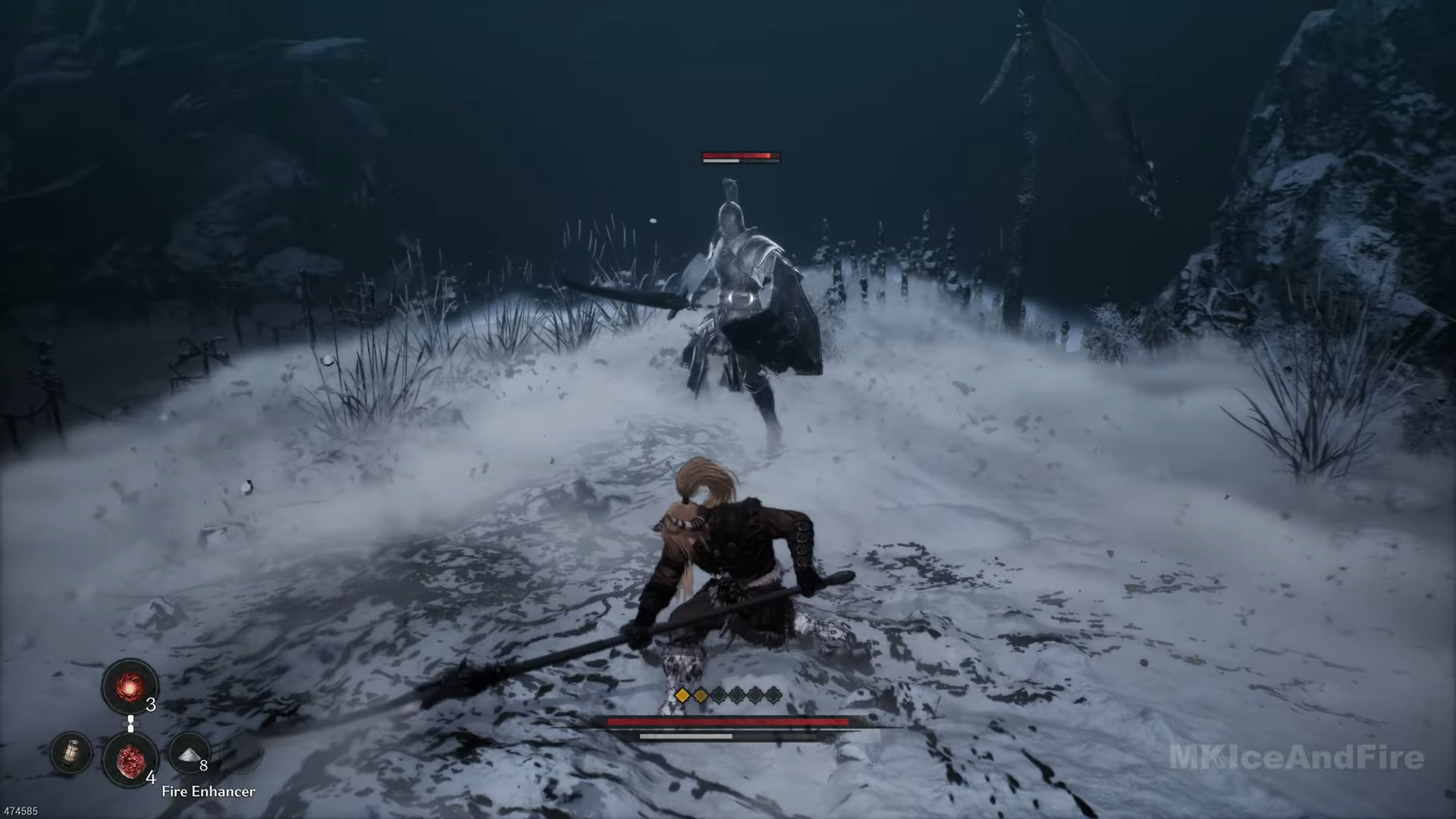
The fast-attacking long-reach spear paired with an elite in one-on-one combat. Fall-off terrain was used to allow quicker enemy elimination.
Third Trial
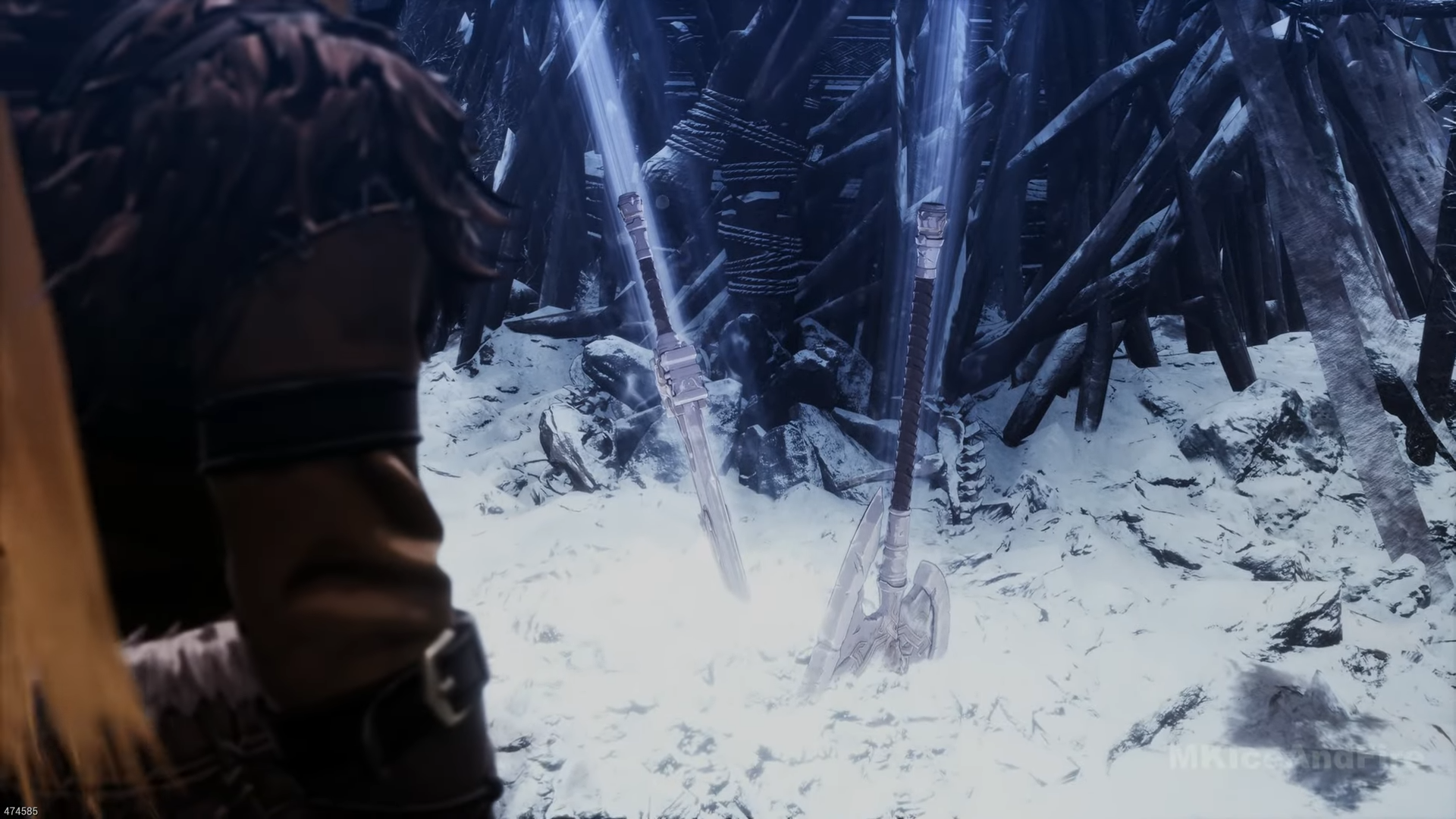
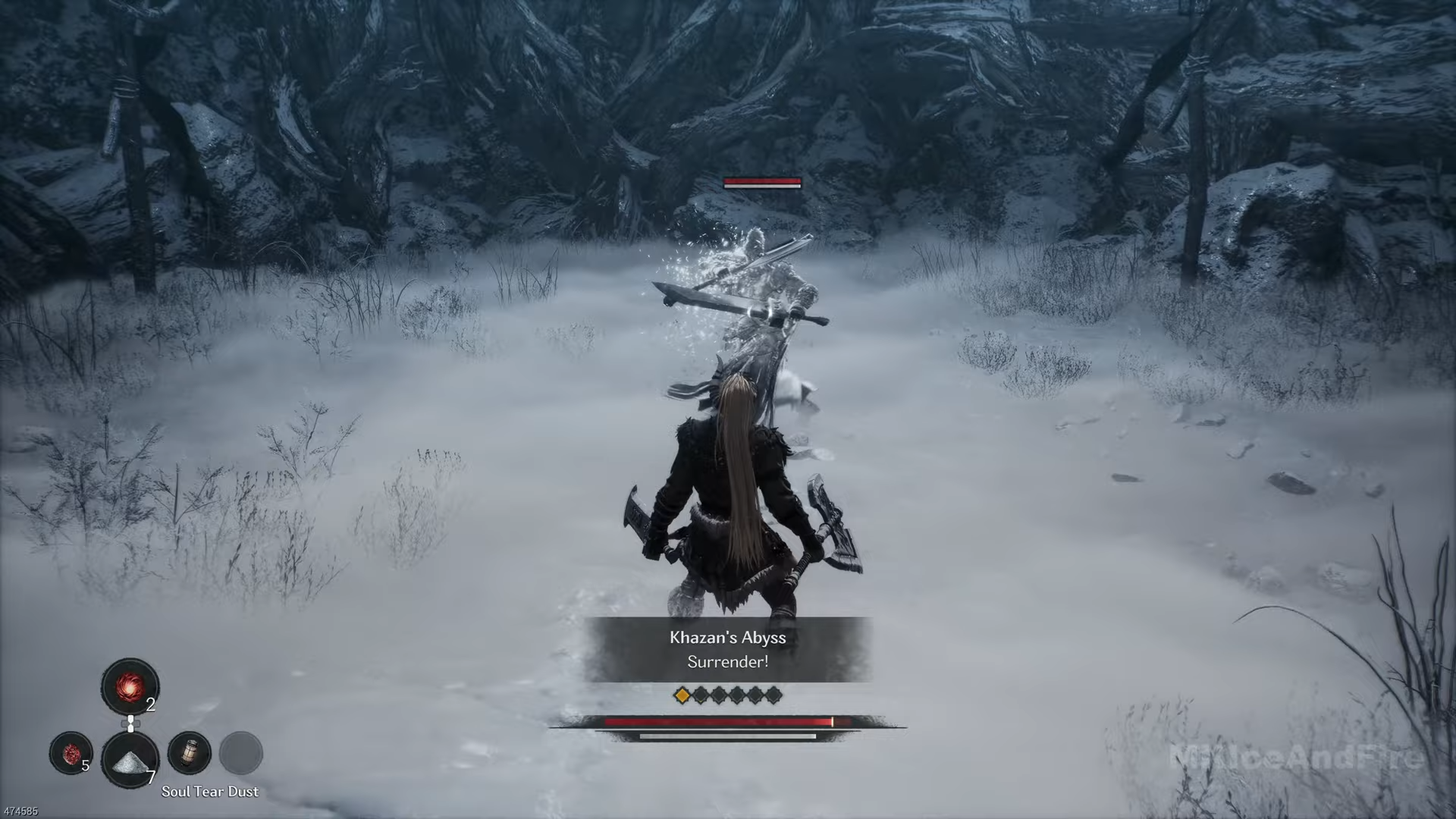
After acquiring the dual-axes — Khazan's signature weapon — battle Khazan's past self. Designed to be overcome through pure skill in a confined space.
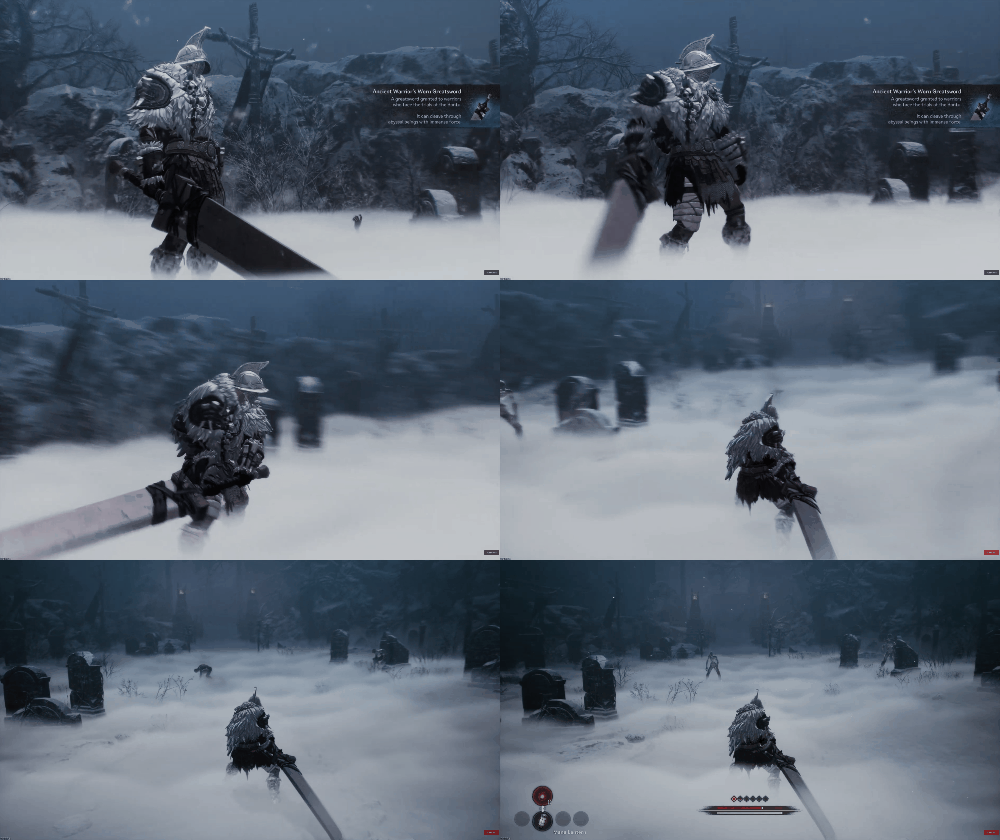
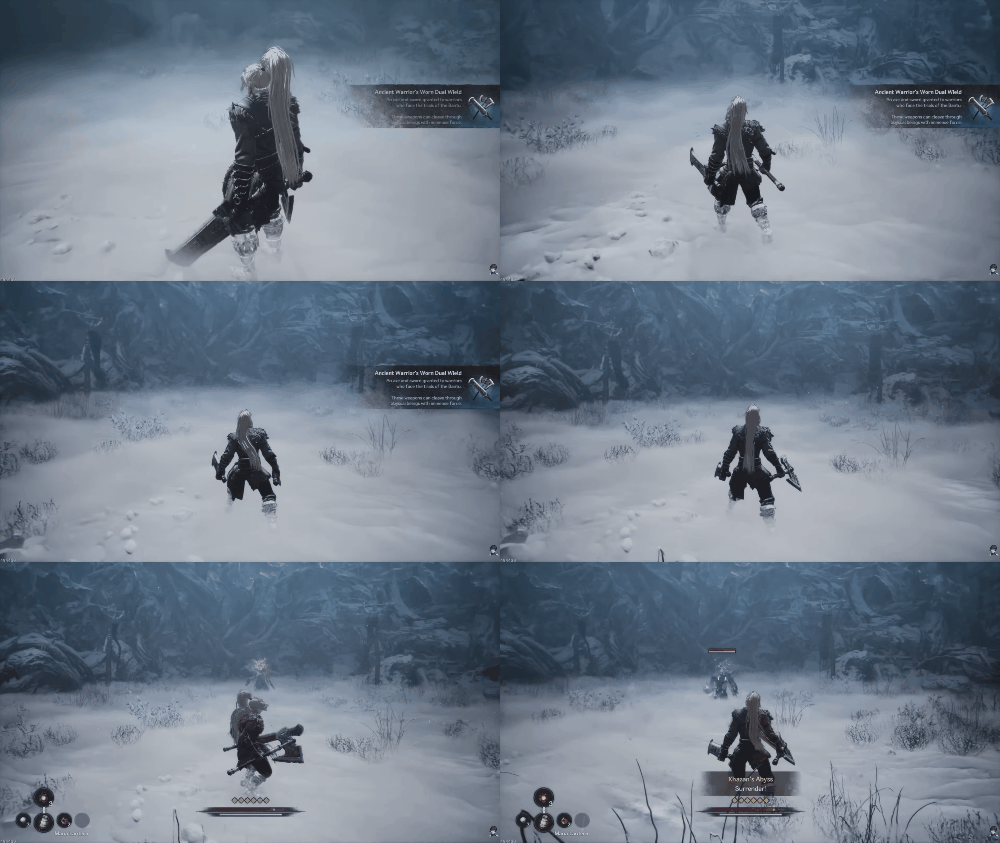
To preserve immersion during weapon acquisition and trials, Level Blueprint was used to control sequence playback and monster spawn timing for natural cinematic delivery.
Retrospective
This was the level with the most hardship and trial-and-error, especially around the narrative and lore side.
Both the lore team and level design team spent a lot of time deliberating on how to translate the "trials" — which also appear in the original IP — into gameplay.
The lore team wanted to honor the source material as closely as possible, while I was concerned it would dilute the level design experience. Finding the middle ground through many iterations was challenging.
Ultimately, since combat and gameplay are the core of our game, we reached a consensus in favor of strengthening the play experience, which led to the "trials" structure as it exists today. StormPass taught me how to navigate situations where level design and lore are in conflict.
El Ravaca
Planning & Development
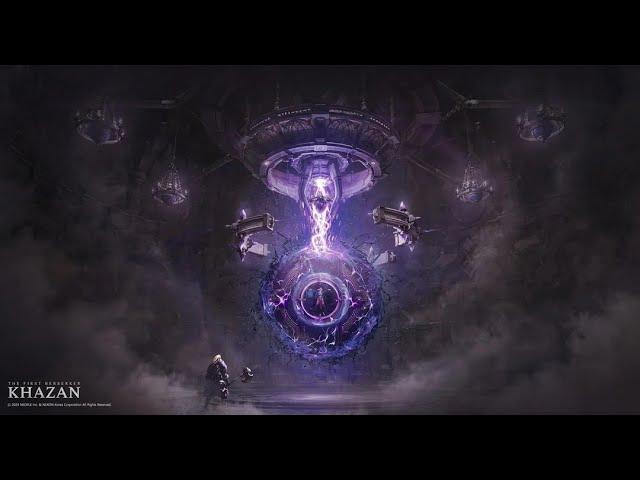
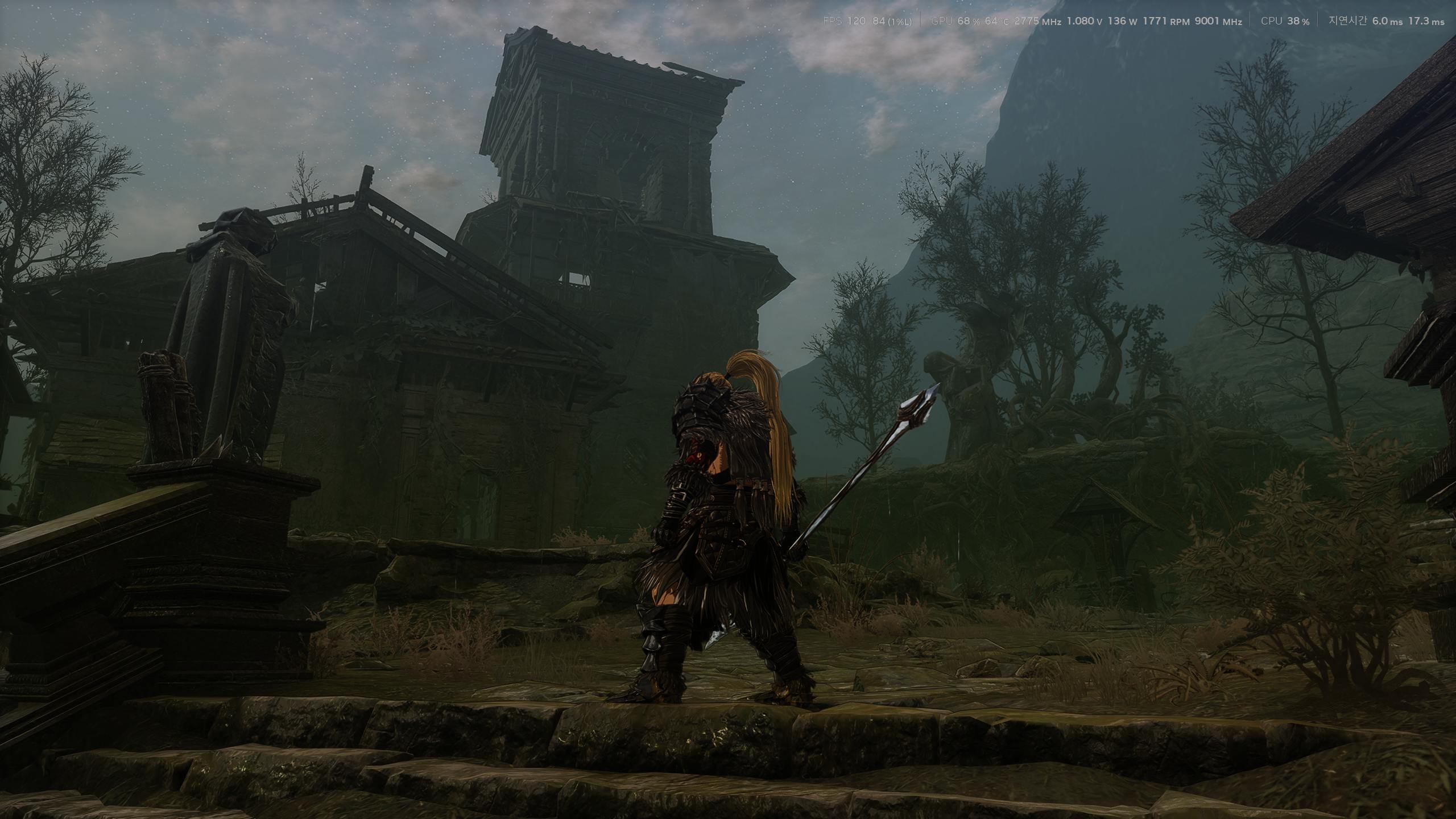
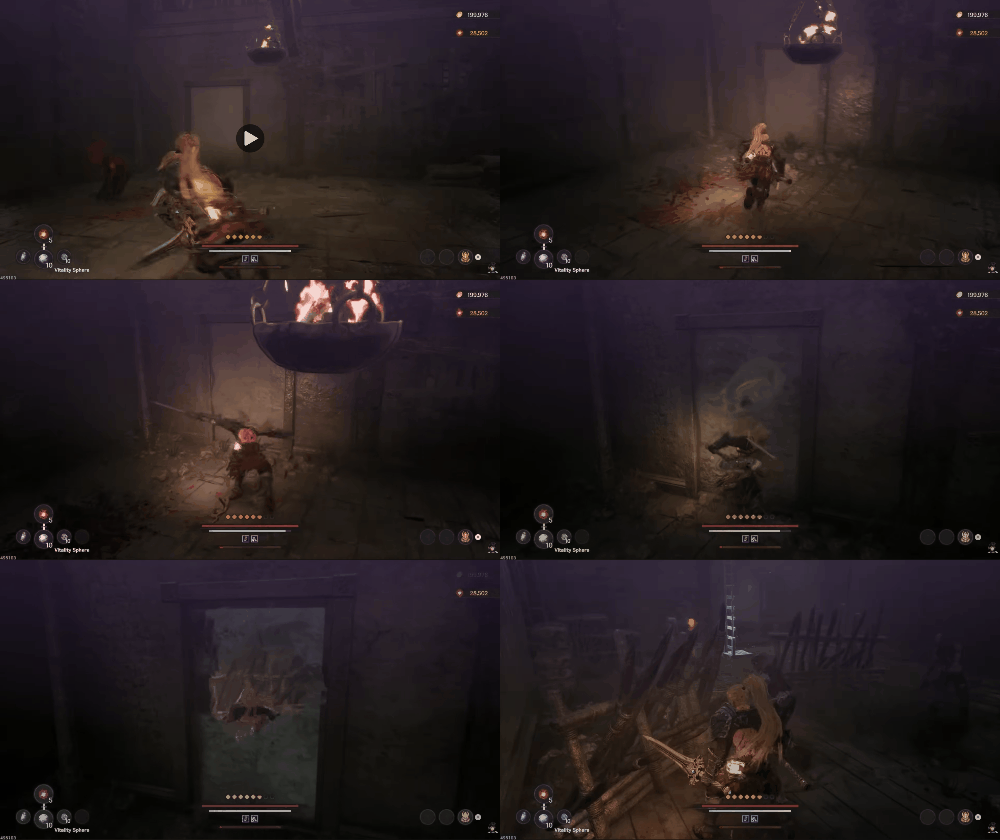
Designed with a three-dimensional spatial structure to match the setting of an "abandoned Chaos laboratory," aiming to provide visual interest and exploration fun. By adding the biological experiment concept, I aimed to create a more horrifying and darker atmosphere than previous levels to deliver heightened tension.
For overall environmental storytelling, I structured 4 themes and play experiences in stages: Abandoned Village → Sewer → Underground Prison → Laboratory — stimulating player curiosity as they descend deeper into the mysterious facility.
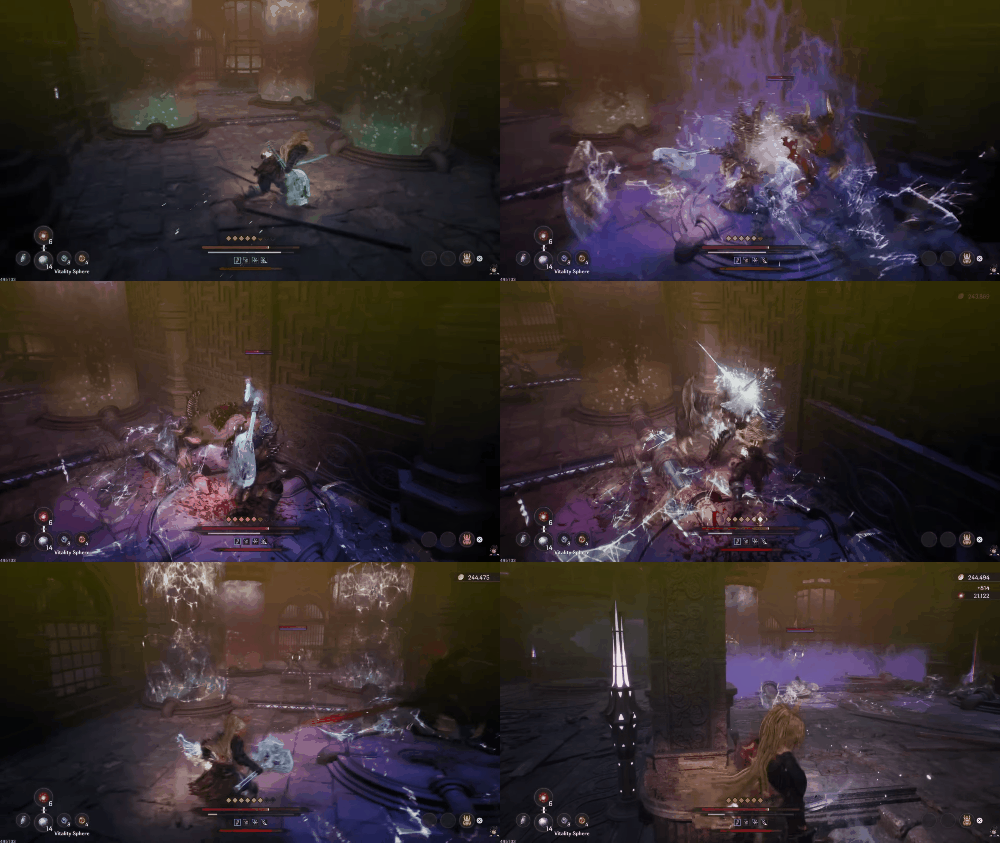
Each theme was designed with narrative connectivity: the zombie-infested Abandoned Village evokes curiosity; the Sewer creates claustrophobic pressure from numerous corpses and narrow passages; the massive Underground Prison presents mystery about the huge facility; and the final Laboratory reveals that all secrets are due to biological experiments, with tense combat through monsters emerging from broken experiment tubes.
The scenario's process of finding kidnapped companions was designed as the play flow. Particularly, by having players directly witness restrained companions mid-level, I aimed to provide dramatic emotional shifts and clear progression motivation.
Compared to other levels, vertical movement and spatial structure provided a three-dimensional experience, while gimmick elements like hidden walls and moving bookshelves enhanced exploration fun throughout the map.
As the midpoint of all 16 missions, I wanted to deliver elevated combat difficulty. Using a narrow spatial structure to restrict dodge range, I designed combat where players advance by defeating enemies one by one through precise guarding rather than evasion.
Each theme also had distinct combat experiences: the Abandoned Village offered clear enemy sightlines for preparation; the Sewer and Underground Prison used blind-spot ambushes for tension; and the Laboratory featured laser trap-based combat with gimmicks requiring care not to break experiment tubes.
Retrospective
The distinct theming per zone was effective, but making the structure overly complex simply due to its size and the "laboratory" setting is a regret.
As the midpoint of 16 missions, there was much trial and error in reaching consensus on how and how much the difficulty should increase. Ultimately, given the level's structural complexity, we lowered the combat difficulty to balance the overall experience.
Many level objects appear but their variety wasn't sustained long enough to leave a deep impression. Based on this experience, in El Ravaca Sector 4 I further leveraged level objects to design space gimmick-centric combat.
The "laser" objects and "energy stream" objects moving along power flows involved not only high implementation difficulty but complex cross-department collaboration between art props and level objects. Through this, I learned that a planner acting as an intermediary to organize the process and ensure smooth workflow for each department has a large impact on the final result.
El Ravaca Sector 4
Planning & Development
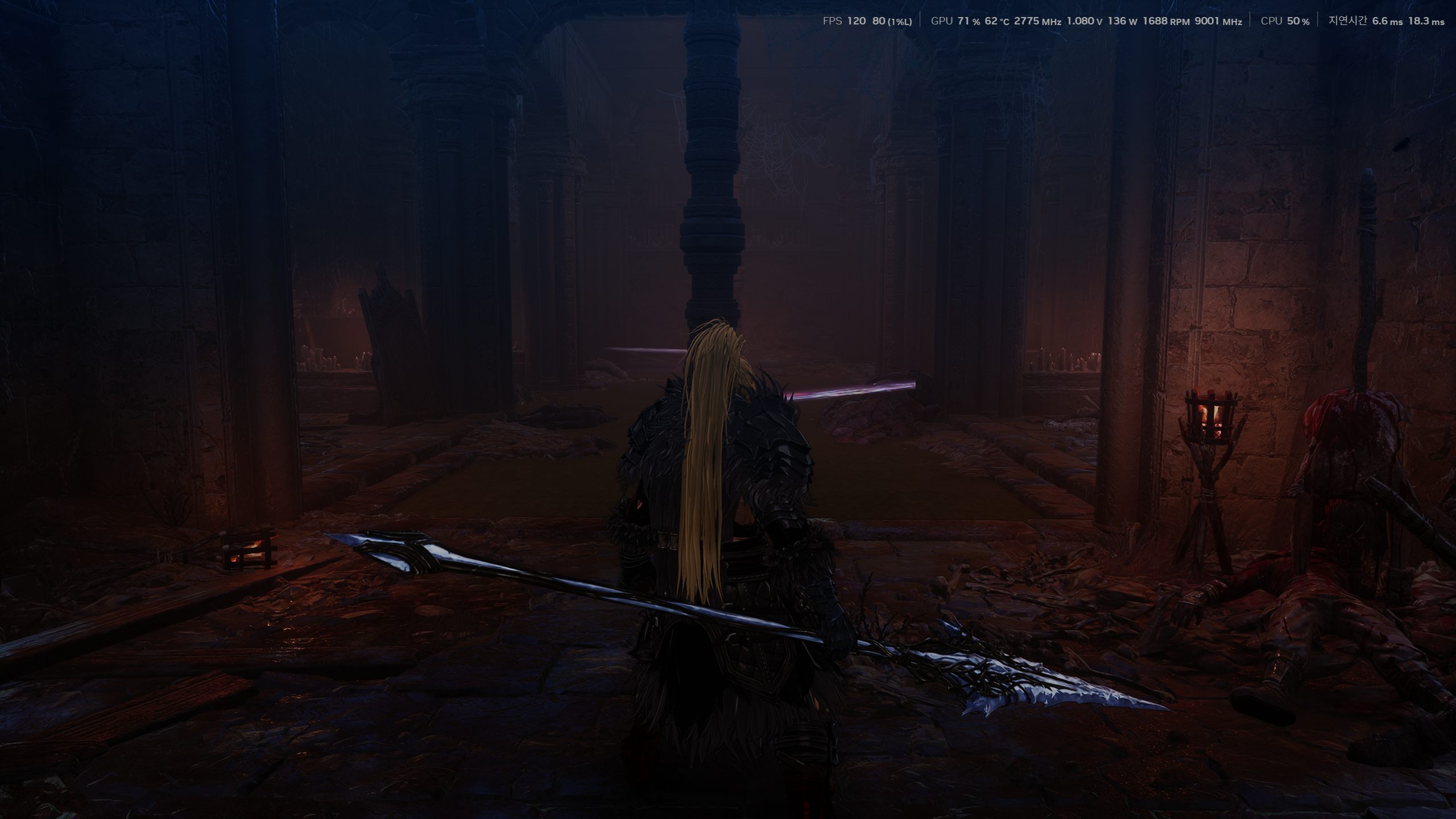
One of the side levels, created at approximately 50% the scale of a main level. Unlike main and sub-levels, it delivers important narrative lore from the game's setting and has its own unique spatial structure and flow.
Conceived as a hidden experimental space within main El Ravaca, I aimed to convey the feeling of descending into darkness through a path going deeper beneath the already-underground El Ravaca.
Items revealing key events of Ozma— Khazan's friend and the final boss of the main game — were placed throughout the level so that environmental storytelling would convey the game's core lore.
To maximize the fun of shortcut discovery, the layout was structured so players could branch from one path in two directions.
While condensing the core play experience of main El Ravaca at high density, I further strengthened level object usage to design space gimmick-centric combat. To convey this effectively, individual combat difficulty was set high for tension while reducing the total number of fights to lower fatigue and control pacing.
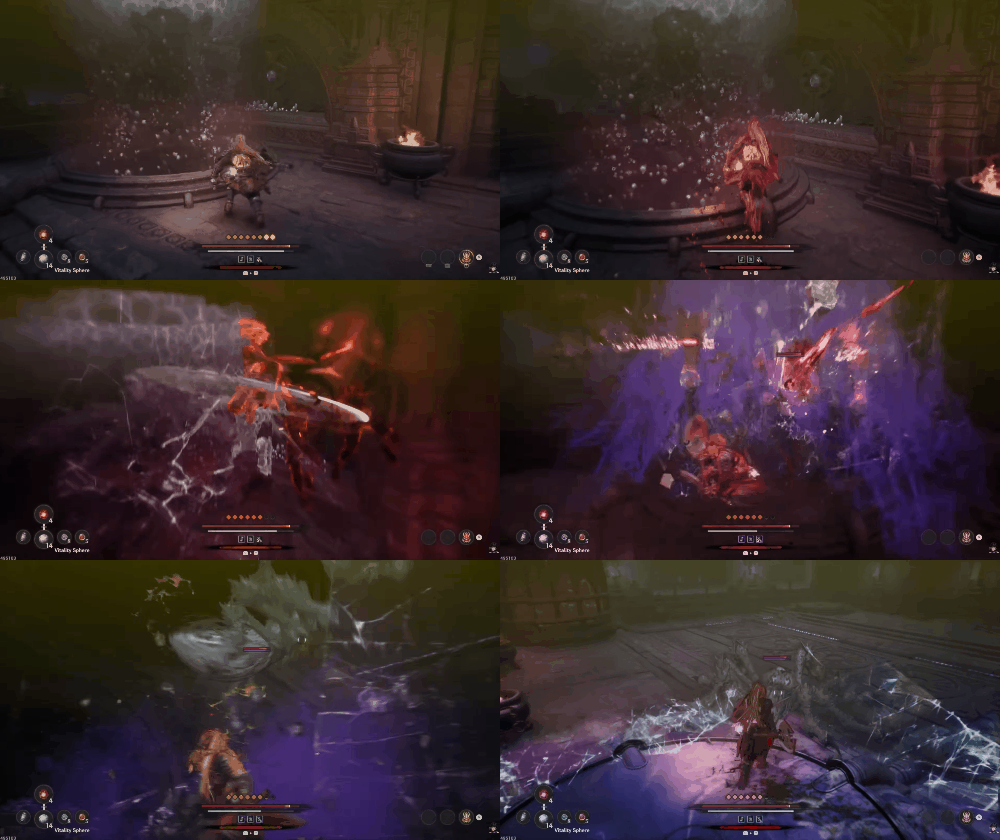
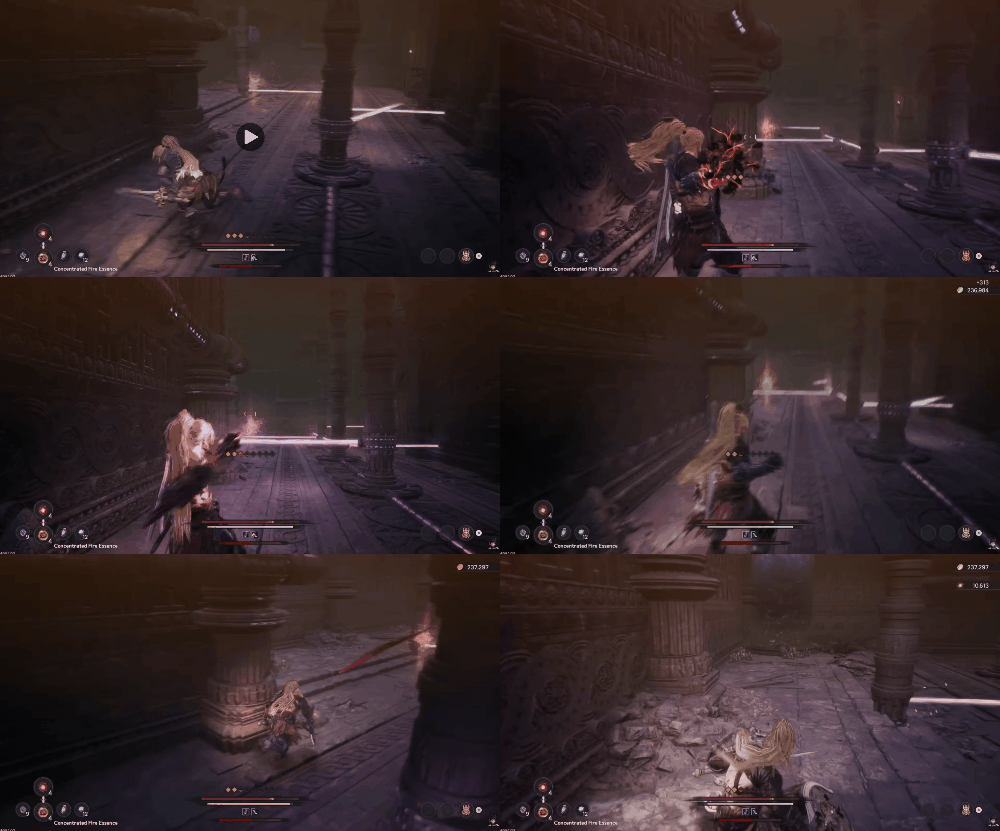
- Elite monster combat in a dangerous environment with explosive spider-filled experiment tubes
- Two sequential elite encounters as experiment tubes are destroyed and monsters emerge
- Strategic combat space where environmental elements like laser traps and explosive traps can be used to eliminate multiple monsters
Retrospective
Personally, I consider this the best-crafted level I made. Each combat zone delivers a distinct experience, and the shortcut discovery and usage worked meaningfully as intended.
One regret: while it is connected to El Ravaca, if I had established a more clearly differentiated atmosphere at the planning stage, I could have delivered a stronger sense of "this is a different kind of experimental space" to the player.
Imperial Palace
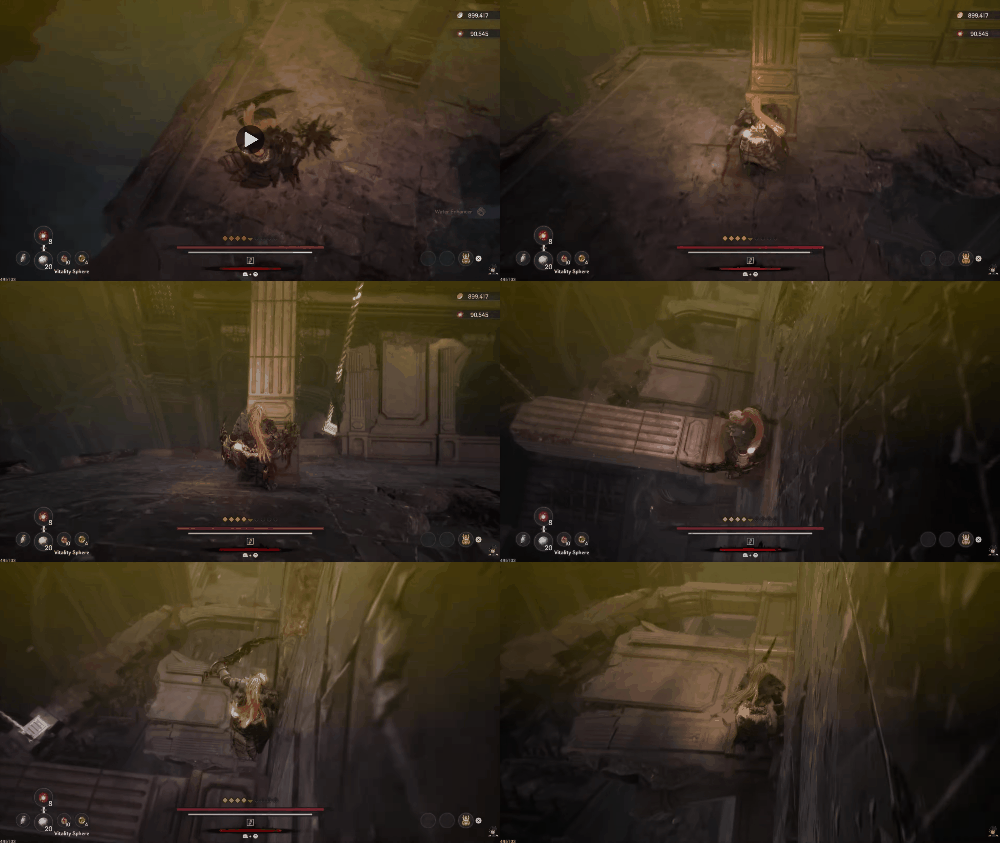
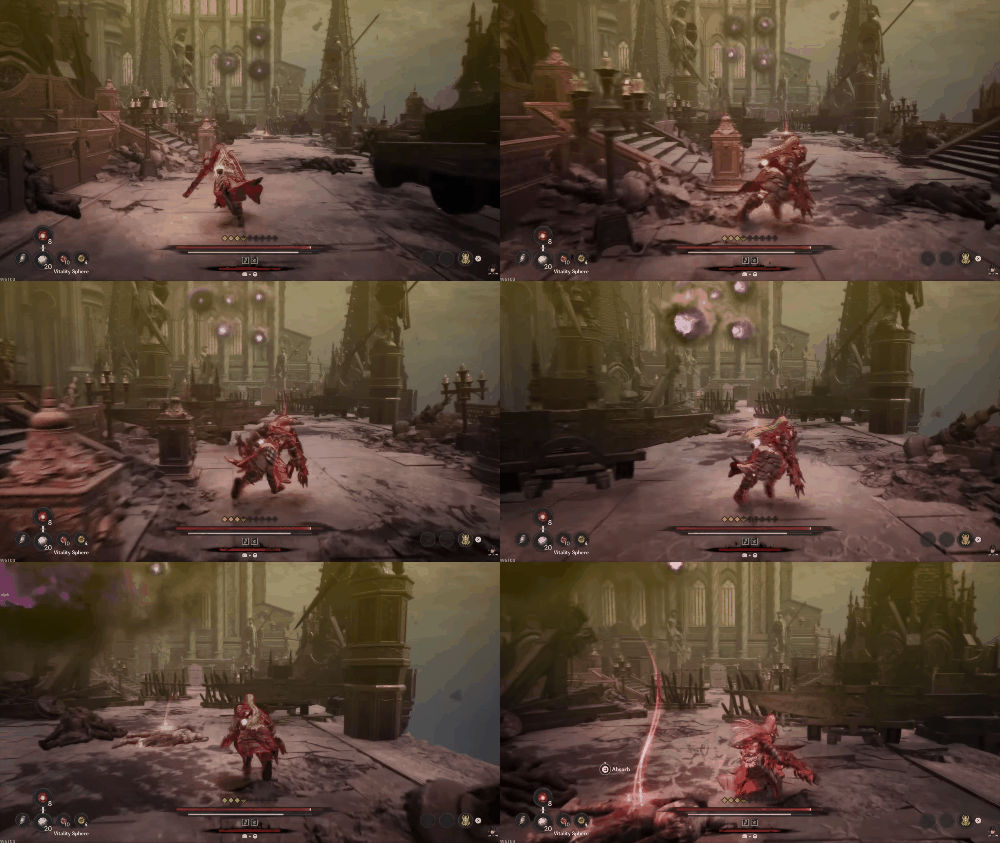
Planning & Development
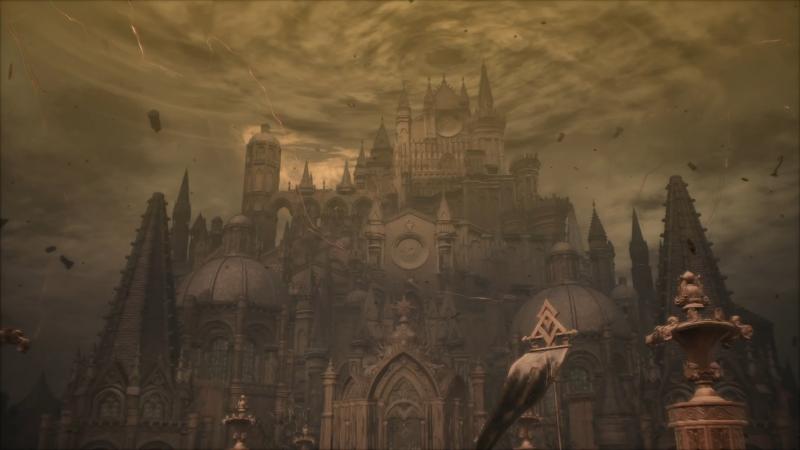
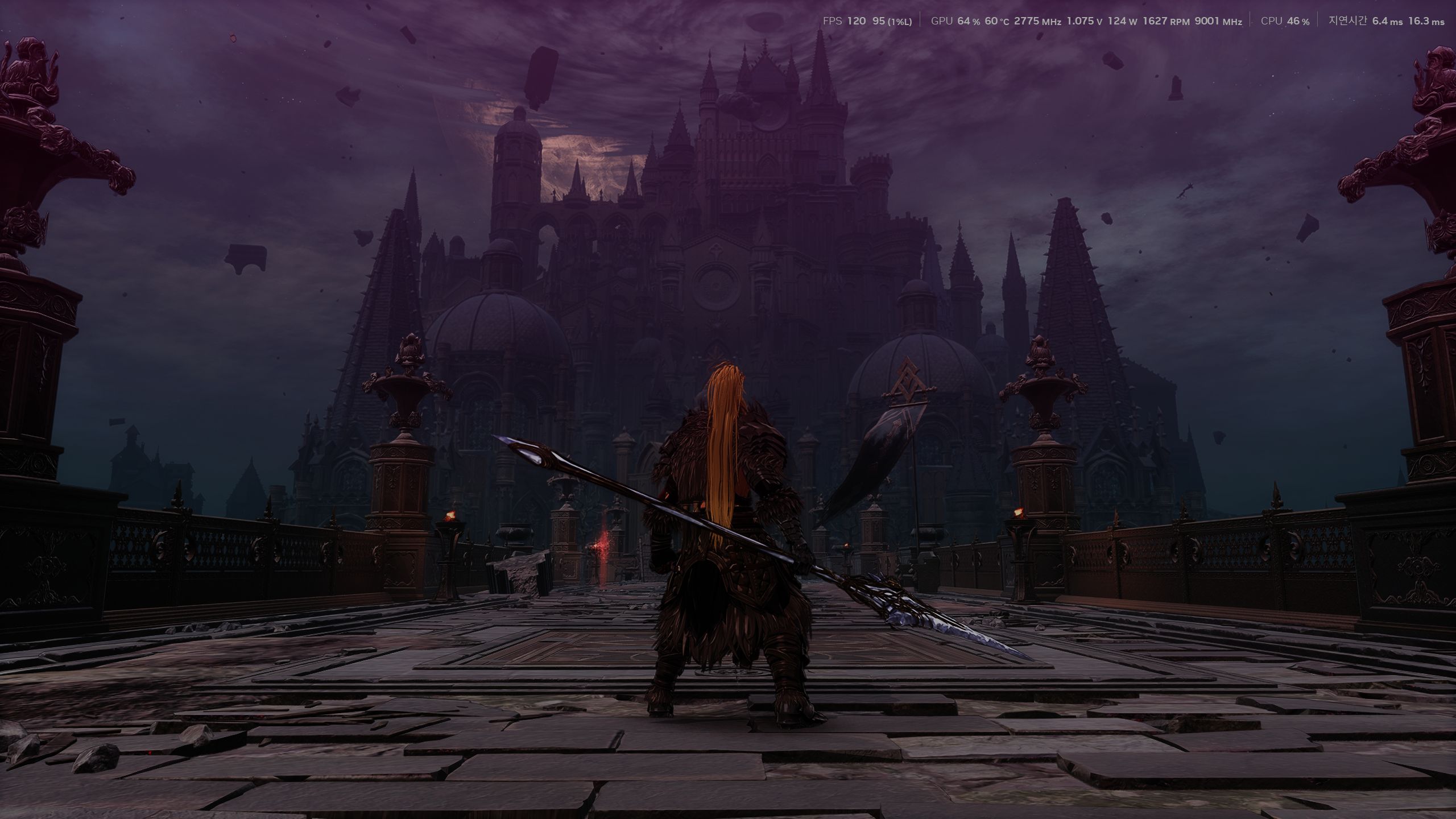
The fourth map I created at Khazan and the final destination that crowns the journey — the most grand and vast of all maps.
Given its nature as the final map, I intended a simple, linear flow rather than complex exploration. The top priority was to deliver the grandeur befitting a finale and to convey anticipation and tension as players advance toward the final boss.
Elevator usage was minimized to deliver the experience of ascending vertically from the lowest to the highest floor of the Imperial Palace on foot. Exterior → Interior → Exterior spatial transitions refreshed the atmosphere, and exterior viewpoints allowed players to visually confirm their own progress.
Even as the final gate, the goal was to make the journey to the final boss feel challenging. Since most previously appeared monsters reappear in the last level, there was a high risk of reduced interest from the lack of new enemies. To compensate, I placed each monster in the spatial structure and theme that best showcases their strengths, designing different combat experiences from earlier encounters even with the same enemies.
To realize the spatial backdrop of the "Imperial Palace," I researched real medieval castle structures and fictional palatial settings as references. Thematic variety was designed based on actual palace spaces such as reception halls, cathedrals, gardens, libraries, state rooms, and throne rooms to deliver fresh visual experiences.
DNF
카잔
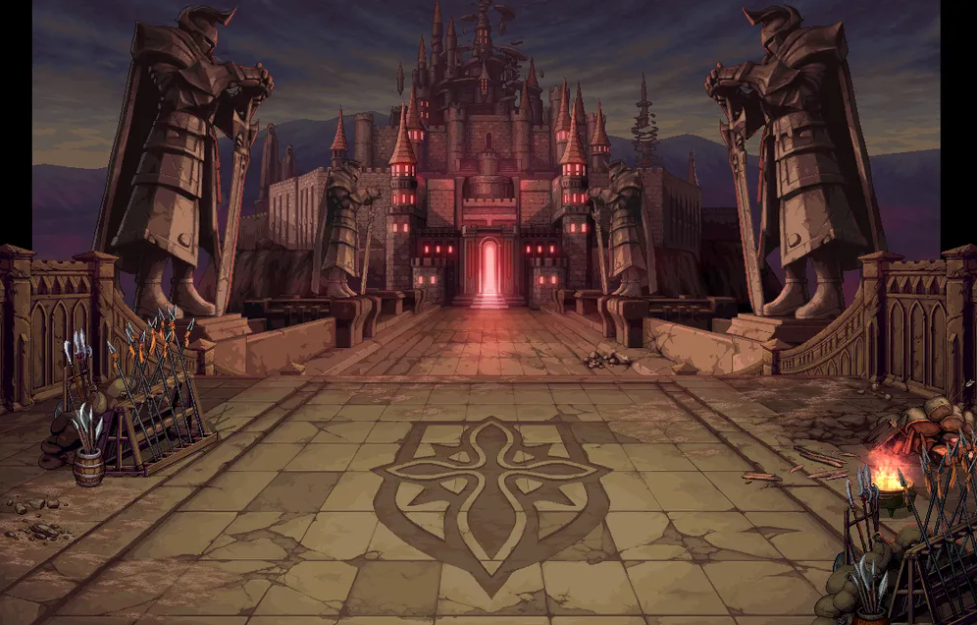
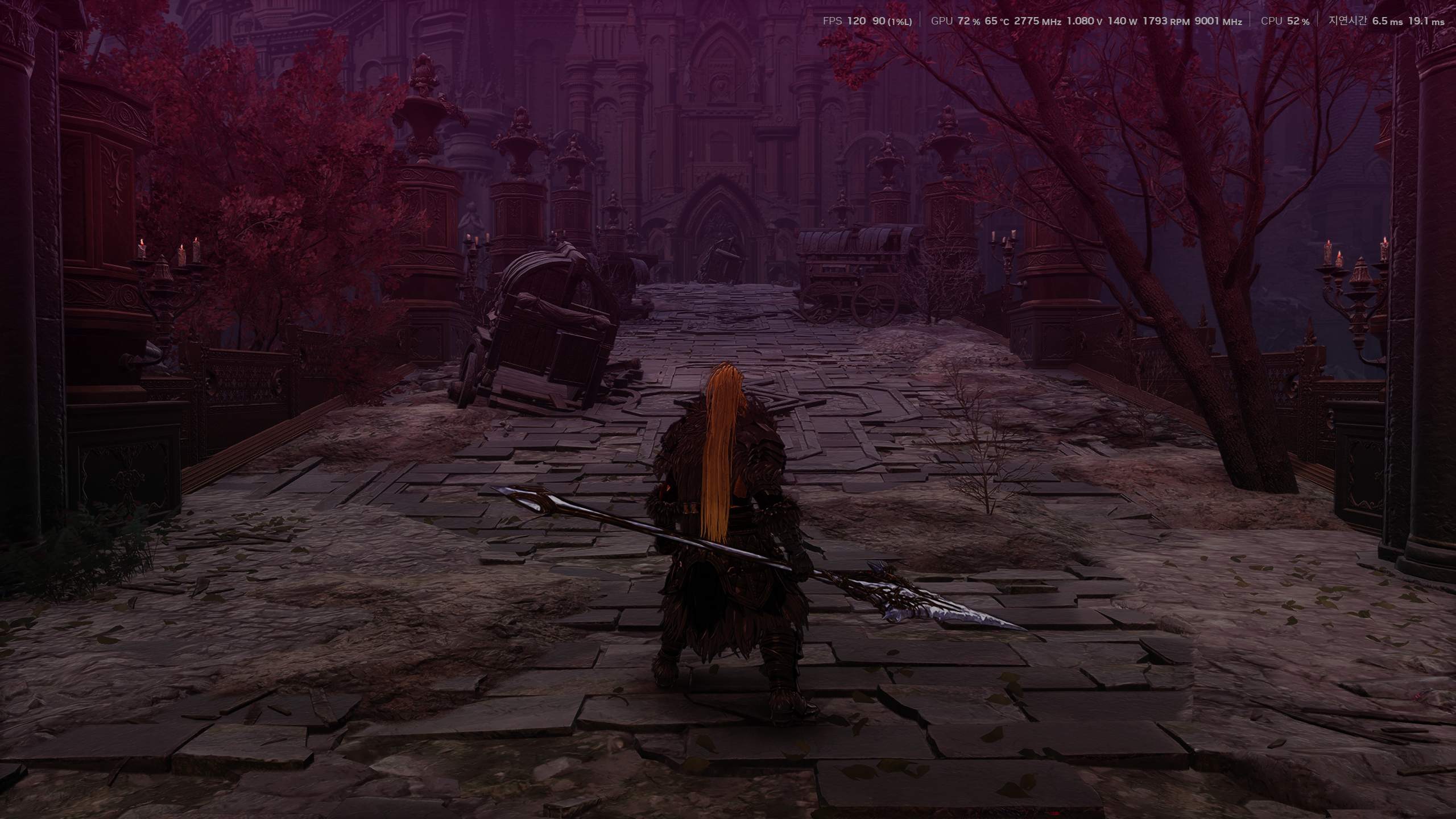
Additionally, referencing the Ozma Raid from the original Dungeon & Fighter (Tower of Revelation Elinor, Tragic City Elerinnon), I created connections between Khazan and the original DNF IF universe to deliver familiarity to existing fans.
Retrospective
As the game's final symbolic level at a massive scale, this was the level where related departments put in the most effort. As the responsible planner, I felt the weight of that responsibility deeply.
The intent of an overwhelming scale and grandeur with minimized sub-paths was good, but this level became an occasion to reflect again on level length and trap elements.
On length: wanting to show many things structurally as the final level — and the art team wanting diverse visuals befitting the emperor's palace — the combined ambition stretched the runtime, increasing fatigue. I learned that finding the objectively appropriate length matters more than overreach.
There is a fall-off trap section just before the final boss — and in a game where jumping and platforming are not core mechanics, this section appearing suddenly in the late game without sufficient buildup gave players frustration rather than challenge. This experience taught me how critical context and timing are when introducing new play patterns.
The Crevice
현계
명계
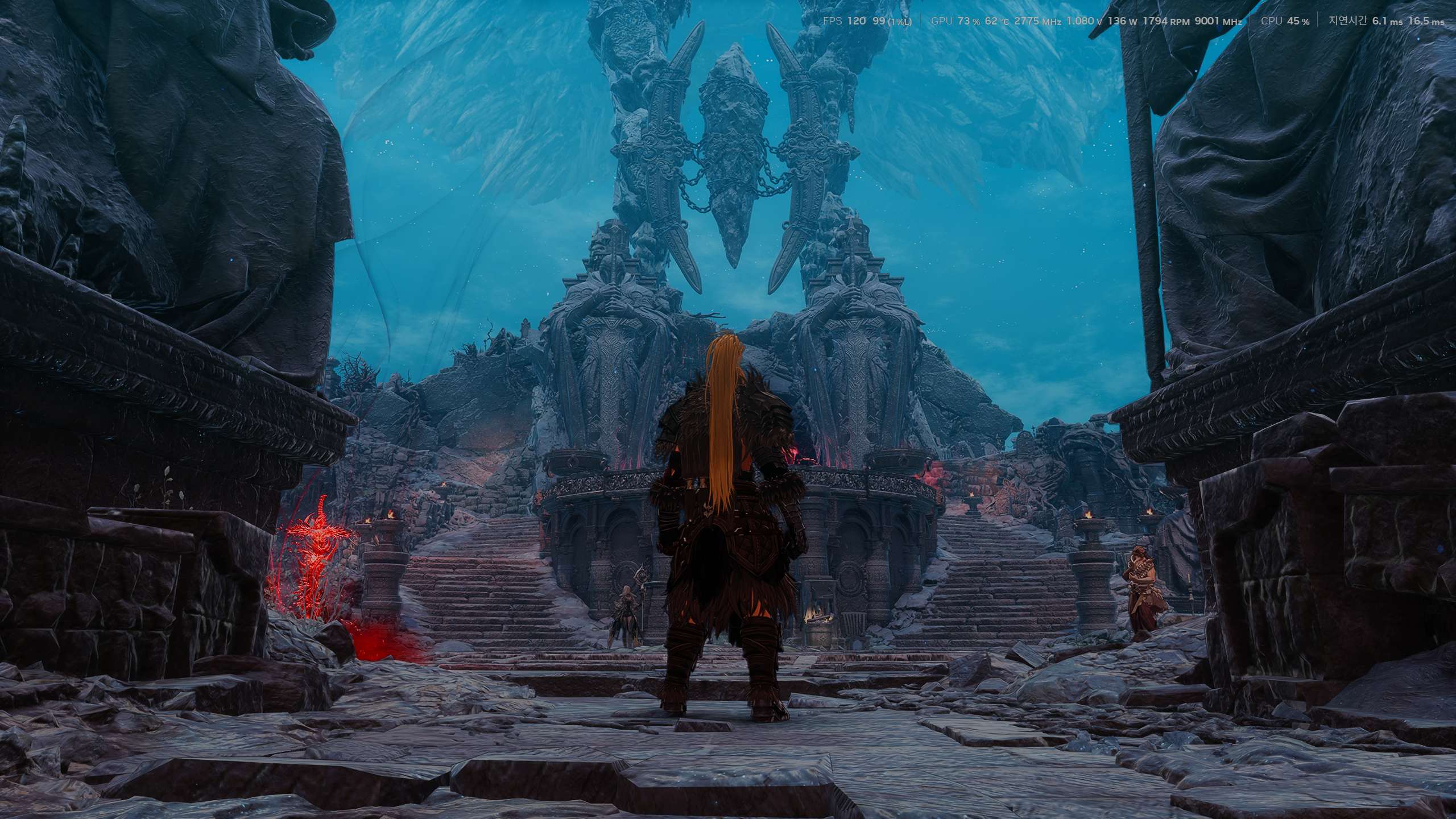
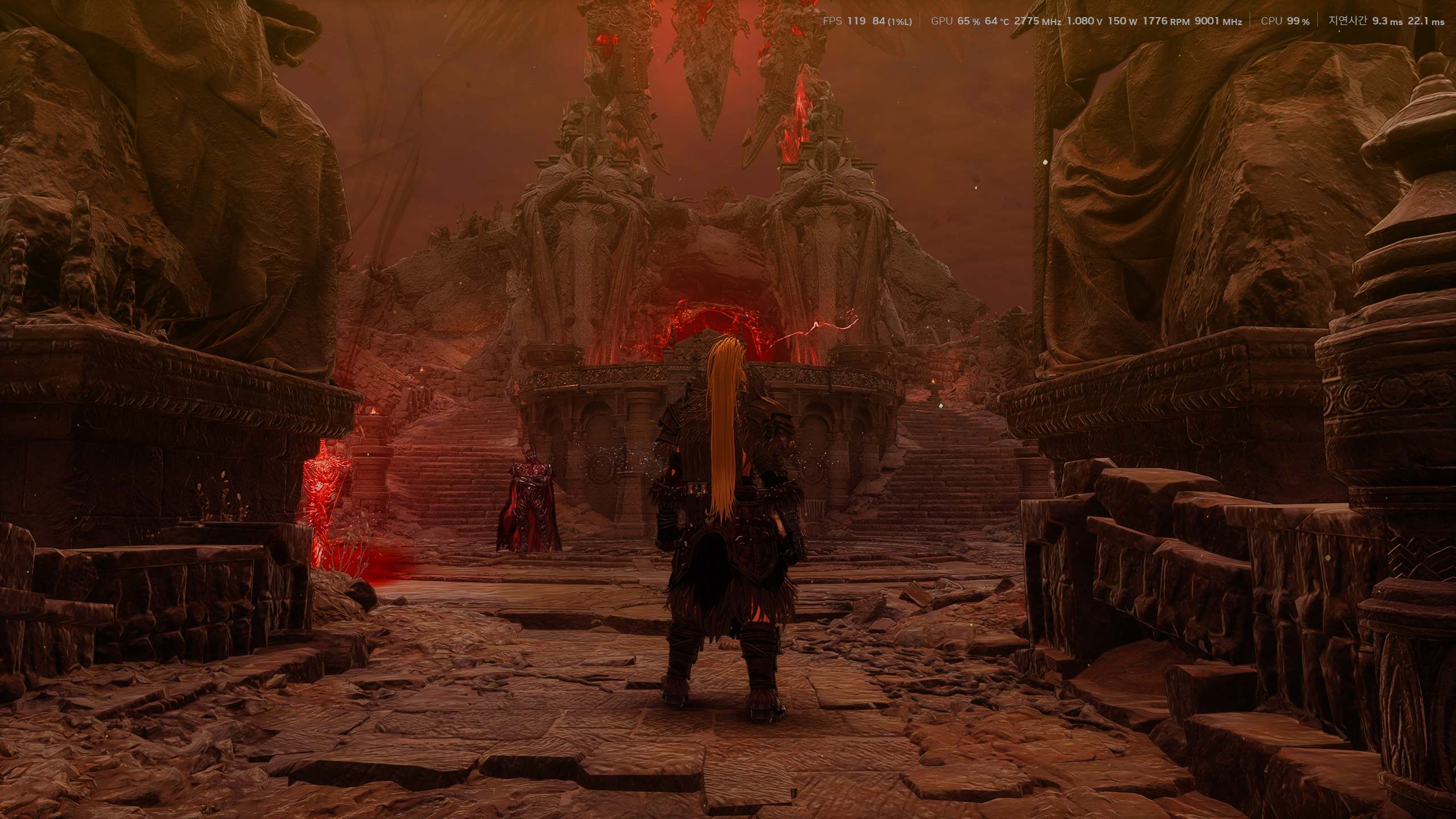
Planning & Development
A hub space for core system functions such as equipment crafting, resupply, and travel to other regions. Objects for entering each mission and hidden exploration experiences within the hub were broadly inspired by the "Nexus" from Demon's Souls.
Lore-wise, it is divided into the "Living World" where mortals reside and the "Underworld" where the dead or underworld beings dwell. NPCs directly aiding Khazan's stats were placed in the Living World, while narrative elements and the "Gwimun" monuments serving as fast-travel to other regions were placed in the Underworld — clearly separating the roles of each realm. This created a structure players could clearly understand: mission travel in the Underworld, all other functions in the Living World.
System priorities were layered as "Mission Progression → Equipment Growth → Collection" and NPC placement was set accordingly:
- Mission NPCs were placed closest to the spawn point for immediate access to mission unlocks and progress.
- Equipment purchase, upgrade, and attribute NPCs were grouped one floor below for efficient management in one place.
- Collection NPCs were given a separate space as collectibles needed level exposure, placed at a slightly removed location reflecting their lower priority.
Sufficient expansion space was reserved in advance for future DLC or NPC additions, enabling content to be added without redesigning the level.
To address areas that might appear empty or unfinished as the space expanded, hidden items were placed along the village's interior paths to add exploration fun.
Retrospective
This was a great experience to design a town space firsthand. I was able to think through what elements are important in constructing a town, and how to communicate system changes — new area unlocks, NPC dialogues — so players can clearly perceive them.
The dual-world concept and level design approach were good, but I wish I had thought more deeply about player movement convenience.
The structure uses a portal in the center of the map to move between the Living World and Underworld, but the portal mechanic feels somewhat generic. I sometimes think that if the two worlds had been expressed as vertically inverted — like the Upside Down in Stranger Things — the transition would have felt far more impactful.
Since level objects and Blueprints alone had limits for implementation and management, I received significant support from the systems team. Through this, I learned how system planners approach and implement level design.
Final Conquest
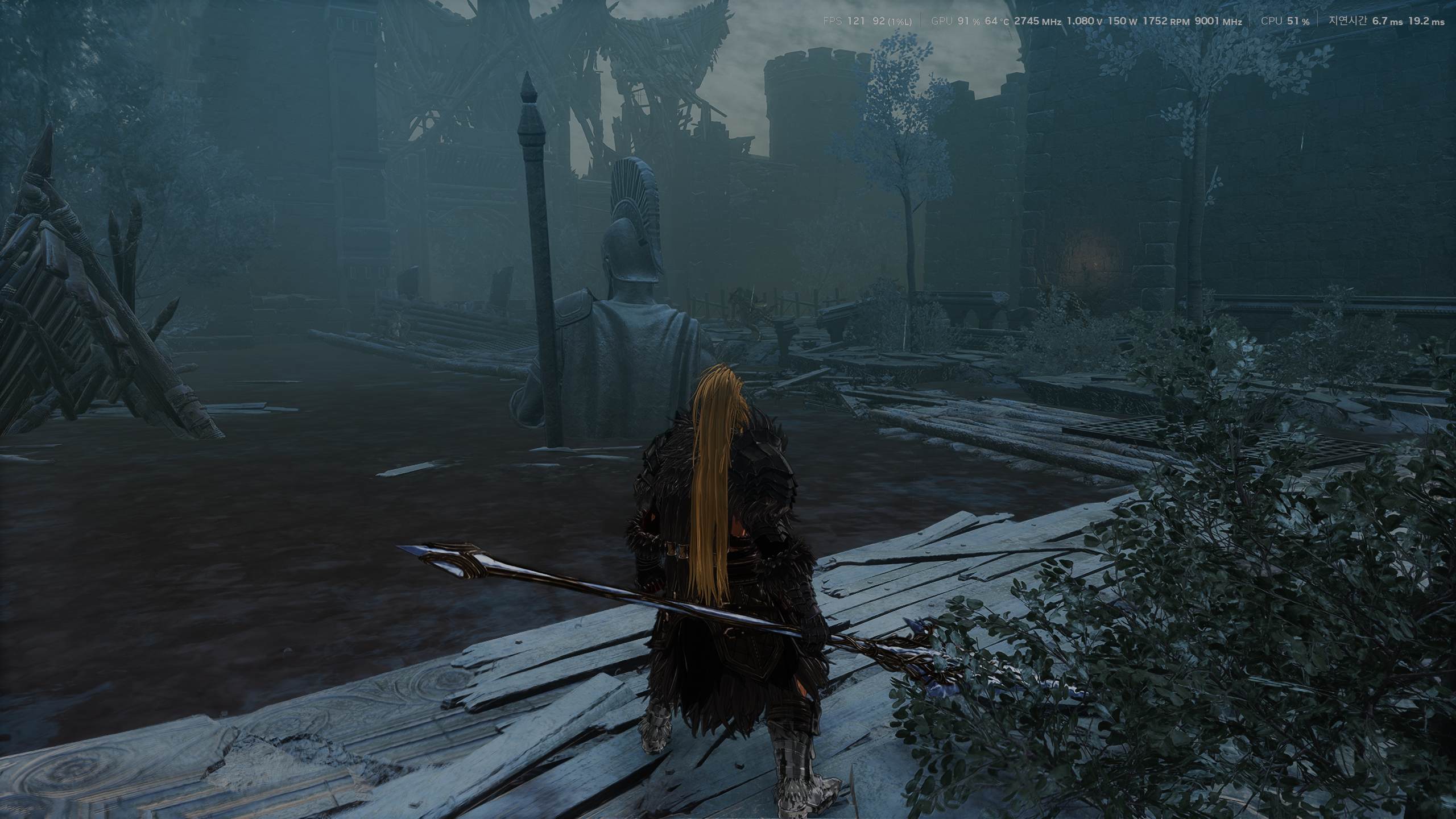
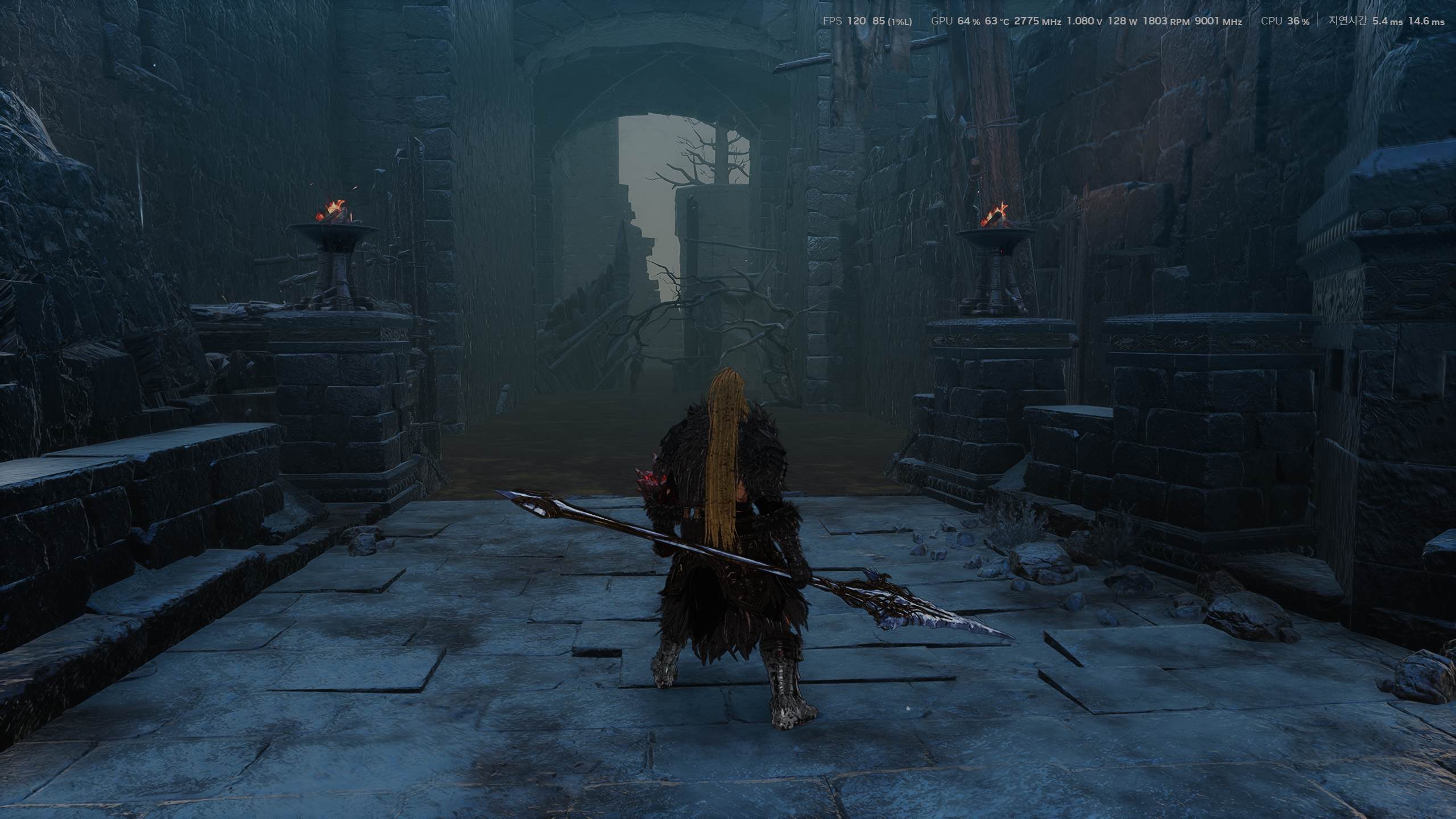
Planning & Development
Among several sub-levels created, this is the only one that survived after others were cut due to scope. Since sub-levels are built by reconstructing the main level's flow, I was concerned it would feel heavily recycled to players.
To break from that, I devised the concept of a submerged fortress — aiming to deliver visually completely differentiated visuals from the fortress experienced in the previous main mission.
Though it was clearly a map players had cleared in the main game before, the character of a flooded area — with fall-off sections and water-filled visual atmosphere — allowed me to complete a sub-level that delivers a fresh experience.
In the early section, carefully advancing on platforms through a dangerously flooded space heightened tension. In the flat section that followed, spatial difficulty was eased while monster placement difficulty was increased to control play pacing.
Retrospective
This level received feedback that it clearly feels different from other sub-levels.
In the early stages the flooded section had a higher play ratio with more frequent fall-offs. But through many rounds of testing, I judged that lowering fatigue was appropriate for a sub-level's purpose and significantly reduced it. I believe this was ultimately the right call.
Postmortem
From VanShee to Khazan — A Change in Collaboration Structure
Unlike VanShee, Khazan gave me the experience of the entire process from the start of development through launch, and I was able to feel and learn things that were similar yet subtly different.
At VanShee, I directly planned and produced monsters included in each level, so combat design was considered together with concept and space. At Khazan, a separate combat team existed, so I experienced placing and adjusting the monsters created by the combat team to fit each level.
In this process, there were moments where the intended experiences diverged. I believe it is important that level and combat teams align on direction and intended experience delivery in the pre-production planning stage before actual work begins.
Collaborating with more related departments than at VanShee, I came to understand each department's perspective and priorities. Through this, I learned how a planner drives results — particularly the communication process — and I still strive to maintain that objective perspective today.
Lessons from Post-Launch User Feedback
As Khazan was an actually launched project, I was able to learn a great deal from gaming media and user reviews.
Some players recognized the Dark Souls 3 homage in Heinmach; others left positive responses about El Ravaca's environmental storytelling and gimmicks, and the overwhelming grandeur and final confrontation of Imperial Palace. This confirmed that the design intent of level design was reaching players.
I realized that what I find fun in other games isn't necessarily what users will find fun, and that my intended direction isn't always right. I also noticed that player preferences have shifted — fewer people now strongly prefer complex level exploration compared to before.
I felt that there is a great deal to consider to create impressive and good level design after launch. Beyond structure, artistic visuals and sense of achievement are important — if similar themes or visuals repeat, exploration interest drops significantly; and if the value of rewards earned from overcoming difficult challenges isn't sufficient, the level's fun also diminishes. I learned that clear visual distinction, reward value, and perceived difficulty must also be deeply checked in the level planning stage.
That said, complex levels are sometimes necessary depending on the game. In such cases, I believe you must sufficiently account for elements that reduce fatigue within that complexity.
I also reflected deeply on the concepts of "fatigue" and "death." Using fall-off terrain or traps to cause death as a way to raise difficulty can — if not carefully balanced — produce excessive fatigue and frustration, and is not an appropriate method of difficulty adjustment. From now on, I aim to regulate difficulty through spatial and combat composition rather than death frequency, minimizing unpleasant experiences.